Talking and blogging about sports, popular culture, news and daily life with JB and a host of others. We might go a little deeper in the Hoosier state than others, but if it matters it will get covered.
There was no podcast this week due to, well, life. Here is a blog edition of Sports and Stuff
That Matters as we get set to kick off college football’s week 2 and the NFL’s
week 1.
College Football
Week One Recap
Some Stuff That
Mattered
Bad home losses by Tennessee and Florida State.
While Florida State didn’t lose to a bad team,
these are bad losses for both of these programs. The aftermath of Florida State’s loss
(players and coaches talking conditioning and not necessarily presenting a
unified front) is not a good look. I
stand by my prediction that they will be improved this year, but certainly not
a great start or a great week number one of year two for Willie Taggart. On Rocky Top, hard to be optimistic about
year two of the Jeremy Pruitt era with a season opening loss to Georgia
State. This week they welcome in BYU and
then get set for SEC play. I’m not
calling for any coach’s head one week into year two, but we all know that’s the
world we live in and these two ‘blue-bloods’ are still in struggle-city.
Freshman QB Performances
Hank Bachmeier for Boise State and Sam Howell
for UNC posted big numbers in big wins for their respective teams this
week. Why does this matter? Not just because Boise and UNC are both 1-0,
and the Mack Brown era got off to a great start, but because the more true
freshman QBs that perform better immediately, I believe the wider net those top
prospects will cast as they search for the “play now” mentality. There’s obviously been a slew of true
freshman QBs get their opportunities and capitalize in recent years. Bachmeier and Howell are just the most recent
to garner national attention less than four months removed from high
school This trend could be good for
those struggling teams in the power conferences, or the non-power conference
teams as well.
Oregon’s Loss Matters – But Not as Much as I
Originally Thought
It was a major heartbreaker for Oregon. If you listened to our college football
preview podcasts, I stopped just short of putting Oregon in the college
football playoff. I still like their
team, but am glad I didn’t now obviously.
That said, I painted a picture of Oregon needing that game for them and
the conference that I don’t agree with as much now. Utah and Washington are primed for great
seasons and could make a playoff push.
Oregon should have a great year themselves, and the Pac-12 did not have
a bad opening weekend, despite UCLA getting handled by Cincinnati, Arizona
choking late vs. a good Hawaii team and Oregon State still being Oregon State.
Georgia’s O Line and Notre Dame’s D Line
Georgia’s offensive line looked dominant and
Notre Dame’s defensive line did not.
This could be bad news for the Irish on September 21.
Bob Davie’s Medical Condition
This matters.
Best wishes to Coach Davie on a full and speedy recovery.
Jalen Hurts Performance
I’m not handing him the Heisman, but wow, Jalen
Hurts and that Oklahoma offense were awesome.
Cincinnati’s Performance vs. UCLA
Last year, Cincinnati went to the Rose Bowl and
ruined Chip Kelly’s first game as a 17 point underdog. This year, the Bearcats were a three point
favorite and played like it, with a workman like effort again the Bruins en
route to a ten point win. The Bearcats
are good on both sides of the ball and could be a major threat to Central
Florida’s dominance on that side of the American Conference.
Florida and Miami’s Performance
I will go on the record with these two teams
having good seasons. I heard and read
about how bad of a game they played (I watched it too). There were penalties and fumbles and
miscommunications, but there was also athleticism. The things that made that game “ugly” are a
lot more fixable than making players more athletic or stronger. I picked Miami to win their side of the ACC
and I’ll stick with it. I never brought
myself to pick Florida to eclipse Georgia, and I won’t, but put the Gators down
for 10 wins in my eyes.
North Carolina’s Big Win
While I was never sold on South Carolina going
in to the season, that doesn’t undermine game and win number one of the Mack
Brown era in Chapel Hill. That was
exciting. As we all know, the ACC is
very top-heavy. There is room for a team
or two to climb quickly to the top tier of that league. UNC is a beautiful campus (as are most ACC
campuses I am sure), Mack Brown has brought credibility and excitement. I’m getting ahead of myself here, but I
certainly could see UNC as a top four ACC program within five years.
JT Daniels Out for the Season for USC
This is a shame for this young man and USC. Their ceiling was never overly high in my
eyes, and not as high now. I could see
them getting to nine wins, but my heart goes out to JT Daniels. Side note, the win over Fresno State is a nice
win. Fresno State will win their share
this season.
Some Stuff That
Didn’t Matter
The Entire Week #1 for the Big Ten
I don’t know that I’ve ever seen a conference
have such a non-impactful week one as the Big Ten did this past weekend. The “Big Four” on the east all beat
overmatched teams handily, Indiana, Maryland and even Rutgers helped the east
side go 7-0, but none of those wins were worth getting excited about, even if
Maryland did score 79 points. In the
west, Nebraska struggling got some attention.
Who cares. Nebraska will be
better, but not great. They won the
game. Move on. Minnesota found themselves in the same boat
as Nebraska. It wasn’t pretty but they
are 1-0. Wisconsin did look good, but
they often look good. Northwestern lost
a tough one to Stanford and seems to be competitive and not great, as
expected. Iowa beat a bad team. Illinois did impress for a team with a low
ceiling. Purdue gave the conference the
only black eye, blowing a lead to a decent Nevada team. Here’s my question – what did we learn about
any big ten team in week one? I content
nothing.
The SEC’s Struggles
News Flash:
The bottom of the SEC hasn’t been good for several years, not just this
weekend, especially in the east. The top
of the SEC is good enough that this will not be a story by the end of the
season. Alabama, LSU, and Georgia are
three of the nation’s best teams. Florida
will hang in there and get ten wins.
There will be a continued excitement around what Jimbo Fisher is doing
at Texas A&M, and obviously Auburn was the big winner in week one. Kentucky will take a step back, Missouri and
Tennessee started out with stinkers. I
don’t think South Carolina is that good.
Arkansas and Ole Miss are both messes and it’s hard to be overly excited
about things in Starksville. There’s
enough at the top that the SEC’s struggles at the bottom are and will be a
non-story.
Trevor Lawrence’s Struggles and Travis Etienne’s
Dominance
Did Clemson already have eight games and I
missed seven of them?
Alabama’s Young Defense
If a freshman is starting at Alabama, even if it
because of injuries, he’s better than some really good players. I don’t buy the youth excuse on Alabama’s
defense.
Iowa State’s Struggles
I was high on Iowa State in our preview shows
and still am. They definitely made some
mistakes and were not sharp and were lucky to escape, but I’m not buying them
as overrated. This is still a nine win
team to me that shakes up the college football playoff race before it’s all
said and done.
Heisman Race as a Whole
Do we have to have a Heisman poll and ranking
after week one everywhere you look? Does
this go on in any other sport?
College Football
Week Two Peek Ahead
There’s a monster game in Austin, TX this
weekend. Give me LSU by 10. I think LSU has their best team, top to
bottom, in a long time and if Joe Burrow can be above average, the sky is the
limit for the Longhorns.
Texas A&M visits Clemson in a rematch of one
of last year’s best games. Not so close
this time, Clemson by a couple of scores.
I’d stay away from the point spread on this one. I don’t think Clemson embarrasses them late,
but I could see them covering late.
Big Weekend for the Pac 12. They don’t have a marquee non-conference
game, but they do have Cal playing Washington and USC playing Stanford. USC vs. Stanford is an elimination game,
essentially, and Washington needs an impressive performance to be viewed as a
possible playoff team.
Ohio State hosts Cincinnati. I’m not calling upset here, but I’m calling
good game. UC is for real. Ohio State is too!
Miami visits UNC. I’m real interested in this one because I am
still buying Miami as a 8-9 win team and a threat to win their side of the ACC
and I was real impressed with UNC in their opener. I think this could be one of the best games
of the weekend. I think Miami will be just
a little too much for them.
NFL Preview
I will not take the time or space for a thorough NFL
preview, but I will go on the record with playoff predictions.
AFC Division Champs: New England (will miss Gronk, but too good
for this division everywhere else), KC (just too much on both side of the ball
for this league, despite the buzz around the Chargers), Houston (moving them
past Indy due to Luck’s retirement. If
they can keep Watson on his feet, their offense can be really good), Pittsburgh
(they are replacing playmakers for sure, but have the right guys back in the
trenches, and this division doesn’t scare me).
AFC Wildcards:
Cleveland (I’m buying what they are selling in Cleveland), Chargers
(steady Rivers with an improved defense)
NFC Division Champs: Rams (don’t sleep on Seattle), Green Bay
(three real good teams here but I see Rogers and LaFleur gelling and a bounce
back year in Green Bay), Saints (still the cream here), Eagles (holding off
Dallas)
NFC Wildcards:
Chicago (great defense and just enough offense), Dallas (enough talent
to squeak in, but not advance)
Three Weekly Segments
You Know What I Miss?
Nutritional Ignorance. When I go eat fast food or eat out for that
matter, I don’t want the calorie count on the menu in front of me. I don’t want or need to know about fifteen
different diet plans. It seems that you
can take seemingly any food out there and spin it into bad for you. I am hitting an age where my metabolism is
noticeably slowing down so perhaps I should have the opposite feelings and
embrace this information overload, but I just can’t embrace it. I miss the days of eat what you want, if you
are gaining weight – eat less and exercise more. It can still be that simple, but it’s hard
for it to be that simple in the information age we live in.
Appreciate This –
Phillip Fulmer’s coaching career at Tennessee. He had a career record of 152-52 at
Tennessee, including a national championship.
Tennessee’s record since he retired?
62-64. Also, appreciate this
about Phillip Fulmer. He’s the AD at
Tennessee. He isn’t retired and counting
his money and showing everyone his trophies.
He is grinding it out trying to make it right.
Gotta Get There –
Arches, Zion, and Bryce Canyon National
Parks. No analysis from me as I’ve never
been there (sometimes this segment is places I’ve been and am recommending, sometimes
it’s places I want to get). Google
it. Read about it. Look at the pictures. Nicole and I made a once-in-a-lifetime
western swing in the summer of 2010 and squeezed as much as we could in with
the time we had, but we did not do the National Parks in Utah justice. It’s on my list.
For the sake of this post, the Warriors’ dynasty is over. This means they will not win one of the next four NBA championships. I’m not betting on them to win one of the next four, but I’m not totally ruling it out, either. They still have a championship nucleus with Step Curry, Klay Thompson and Draymond Green and the way the free agent dominoes fell, there are a lot of really good teams and no super teams and while I’m not picking them to win the west or the Larry O’Brien trophy next year, I am not writing their obituary just yet either. That said, let’s stick in the here and now for this post and put the Warriors’ accomplishments, three rings and five straight finals appearances, in perspective. I have defined dynasty as winning two or more titles in a four year stretch. By that definition, there have been fourteen dynasties in NBA history. Where do the Warriors fit in? As you will see, I will put them at #4, just nudging out #5 and #6 on my list. Here are the top ten dynasties in NBA history in my eyes (actually all fourteen of them, just the top ten broken down). Enjoy and feel free to constructively debate.
#1 Boston Celtics,
1957-1969, 11 titles
Eleven rings puts Bill Russell and the Celtics as the greatest dynasty of all time.
I know it was a different NBA and I know I wasn’t around to watch it, but 11 titles out of 13 seasons signifies both dominance and staying power, anchored by the greatest winner in the history of the sport, Bill Russell. There’s a case to be made against them as number one that there weren’t enough teams (although you could spin that as a case for them as well), but 11 titles out of 13 years is simply too much to have anywhere but number one.
#2 Chicago Bulls, 1991-1998,
six titles
Michael Jordan never started a season in the 1990s that didn’t end in a parade. As most know, he missed all of the 93-94 season and most of the 94-95 season due to his baseball pilgrimage, before carrying out their second three-peat of the decade with Scottie Pippen and a totally different supporting cast. Had MJ not retired and the Bulls won the 94 and 95 rings (which I strongly think they would have), I’d probably have them at #1.
Michael went six-for-six in the 1990s when it came to starting a season and ending it with a championship.
#3 Los Angeles
Lakers, 1980-1988, five titles
Showtime was consistently great and they got the best of the Celtics two out of three times in their head-to-head NBA finals matchups, while getting the best of Phily twice and Detroit one other time. Engineered by Pat Riley and with Magic Johnson running the show, this was probably the most entertaining brand of basketball on the dynasty list, but it didn’t come at the expense of toughness. Cue up some 1980s playoff games if you need visuals of that.
I count myself lucky to remember the end of the Showtime Dynasty.
#4 Golden State
Warriors, 2015-2019, three titles
Ranking #’s 1-2-3 were easy, 4-5-6 not so much. I give the nod to the Warriors considering their three titles came in a five year stretch, they reached the finals including the other two years, including a 73 win season, and were derailed by injuries this year. That might make me a hypocrite as I said don’t use the injuries as an asterisk for the Raptors accomplishments in a previous post, but so be it. The Warriors five year run was dominant. Nobody else had a chance to establish even a mini-dynasty, everyone else’s best case was to steal a championship, like Cleveland and Toronto did.
The Warriors are closer to five rings than any of the other three-ring dynasties.
#5 Boston Celtics,
1981-1986, three titles
A couple games in a couple series vs. the Lakers are the difference in the Celtics being here or at #3. The Celtics got their three rings, but only got by their nemesis once. You could make a case that the Celtics run is more impressive than the Warriors because of the greatness of the Lakers (and the 76ers for that matter), but I still gave the nudge to the Warriors dominance.
Did the best frontcourt ever play in Boston in the 80s?
#6 San Antonio Spurs,
2003-2007, three titles
The Spurs rank below the Warriors and the Celtics due to the combination of them underperforming in the years between titles combined with the fact that the NBA was in a transition at this time between their most powerful teams. That said, if you throw 1999 and/or 2014 into the same “dynasty classification” and there’s a case to move the Spurs up to #3 in my eyes. There’s no denying the Pop/Duncan/Parker/Ginobili foursome will go down as one of the greatest combos of all-time.
This was a dynasty that made themselves hard not to like.
#7 Minneapolis
Lakers, 1949-1954, five titles
The George Mikan led Lakers posted five titles in six years. This was in the pre-merger era, which is why it rates lower than it would have otherwise.
Dynasties looked a little different in the 40s and 50s.
#8 Detroit Pistons,
1988-1990, two titles
The “Bad Boys” rate as the highest two ring dynasty in my eyes due to the fact that they upended the Lakers and held off the Bulls as long as possible, otherwise the #2 and #3 dynasties on this list could be even more impressive than they are. Heck, they wrote a book, The Jordan Rules, about this team’s defense, and did a 30 for 30 on them. That’s worth something!
Isiah and the Pistons had to get by the Lakers and hold off the Bulls, not the easiest time to win multiple championships.
#9 – Los Angeles Lakers, 2000-2002, three titles
I did rate the Pistons two titles over the Lakers three and several teams winning three titles without three-peating over the Lakers? Why? The combination of the NBA didn’t have an obvious other team that was ready to win a title to hold off the Lakers at the time (pains me to say that, as the Pacers were a Finals victim, but the ’98 Bulls beat the best Pacers team in my eyes), and it still took a furious comeback vs. Portland in 2000 and a game that is surrounded by conspiracy in 2002 for them to continually break through. That said, this is when Shaq was as dominant as he ever was.
For supposedly not liking each other, they were able to bring some hardware to LA.
#10 – Miami Heat, 2011-2014, two titles
LeBron’s super team got their two rings, but many though they could have and should have gotten more, but 2011 Dallas and 2014 San Antonio said otherwise (this Heat group is actually closer to being a single champion thanks to their theft job against San Antonio in 2013). It’s hard to say a group that won two rings under-achieved, but they certainly didn’t match what they promised in the 2010 welcome party on south beach.
These three pictured more than two rings together when they joined forces in 2010.
The rest of the rankings:
#11 1970-1973 Knicks (two rings), #12 1994-1995 Rockets (two rings), #13
1974-1976 Boston Celtics (two rings), #14 2009-2010 Los Angeles Lakers (two
rings)
While all of the attention in the NBA is now on the crazy free-agency and trade season that we are in the middle of, let’s take a moment and put the Raptors’ championship in perspective and historical context. I will do the same with the Warriors dynasty in my next post. This article will rank all-time “single champions,” teams that won only won title in a given era. Next year’s race is seemingly as wide-open as a race has been in nearly a decade, and I’m certainly not counting the Warriors and the Curry/Green/Thompson nucleus out from extending their dynasty, but I’m not betting on it either. If either the Raptors or Warriors claim the Larry O’Brien trophy, I’ll modify these lists appropriately.
For the sake of these two articles, I have classified every NBA Champion as part of a dynasty or as a single champion. I defined dynasty as winning two or more championships in a four-year window. The only title-winners that were hard to classify were the Spurs. The Spurs won five championships in a sixteen year window. After consulting with some of the Spurs’ best fans and sticking with my parameters of two titles in four years, I classified their 1999 title as a single champion and their 2014 title as a single champion, while classifying the 03-05-07 titles together as a dynasty.
So, where does the Raptors title rank them amongst champions? I rank them pretty high, given the fact that
they broke up one of the NBA’s best dynasties of all time. The case against ranking them this high is
the fact that they weren’t the one-seed in their own conference and were nearly
eliminated in round two by Philadelphia, but that will be a mere footnote as
time passes. The case for their high
ranking is they were one of this generations best defensive champions and they
navigated their way through a very strong and balanced eastern conference and
then you must historical context of the Warriors dominance, even with or
without the Durant injury.
Best “Single Champions” in NBA History
1983 Philadelphia 76ers. A 65-17 regular season and a 12-1 playoff record, Phily dominated from start to finish this season behind the great Moses Malone and Julius Erving and ended up being the only champion in the 1980’s not named the Celtics or Lakers, until the Pistons became champions in 1989.
Dr. J, Moses Malone and the ’83 76ers are the best “single champion” in NBA History.
2. 1972 Los Angeles Lakers – This Lakers’ champ, loaded with Wilt Chamberlin, Jerry West, Gail Goodrich and Elgin Baylor, came between LA dynasties and eliminated the Bucks and Knicks along the way. This team kept the Knicks best run of success to two titles and kept the Bucks from establishing one of their own, as this was during the window when Milwaukee had a veteran Oscar Robertson paired with a young Lew Alcindor before he headed to LA himself. It was these Bucks and Knicks that eliminated LA in 71 and 73 that kept this loaded group as a single champ, but a very dominant one at that.
Led by Elgin Baylor, Wilt Chamberlin, and Jerry West, the 1972 Lakers were loaded, but were only able to win won title with this core.
3. 1971 Milwaukee Bucks – Coming from the same era as #2, these Bucks and the 72 Lakers were in each other’s way of becoming dynasties and limiting the Knicks dynasty of the 70s to two titles. After a 66-16 regular season, the Big O and Lew Alcindor-led Bucks lost only two playoff games en route to the ring.
Bucks fans would have loved to have had more years with Lew Alcindor and Big O together, but will always relish their one title in 1971.
4. 2008 Celtics – One of the first ring-chasing super teams to accomplish their goal, the trio of Paul Pierce, Kevin Garnett and Ray Allen, with a major assist from a budding Rajon Rondo, were a dominant 66-16 during the year. They were tested majorly in the playoffs (forced to game 7 in the first two rounds vs. Atlanta and Cleveland in series where the home team went 7-0), but were ultimately too much for a still strong Pistons team and the new-look, Shaq-less Lakers, who would ultimately win the next two titles.
When Ray Allen and Kevin Garnett joined a veteran Paul Pierce, it was for one reason: to win a ring. Mission Accomplished in 2008.
5. 2014 Spurs – After heart-break city the year before, this Spurs group dismantled the Lebron James-led Heat in five games in the Finals after a 62-20 regular season and an impressive run through the western-conference. This was the last title for the Duncan/Ginobili/Parker trio and they got a major boost from a young Kawhi Leonard, who would go on to win Finals MVP.
The Spurs dismantling of Miami in the 2014 Finals was special any way you slice it, but even more so after the heartbreak of the 2013 Finals for San Antonio.
6. 2019 Raptors – For the reasons outlined above, I rank the Raptors at #5 amongst single champions. Thanks to his introverted, public persona and some drama surrounding his San Antonio exit, Kawhi Leonard is this generation’s most underappreciated great player (that could certainly change if he brings the Clippers a title). Kyle Lowry is championship-worthy point guard material and the emergence of Pascal Siakim. Many might want to put an asterisk next to this title with the Warriors being without Kevin Durant. That was certainly a factor, but the core of the Warriors team that they beat was the same that won the ’15 title and was a play or two away from repeating in ’16 without KD. To those that counter than with the Klay Thompson injury as an asterisk, remember the Raptors were winning/controlling the series when Thompson was on the floor (had won two of the three full games that Klay had played in) and were locked in a really good game that they still could have won when Klay exited game 6.
While you can’t ignore the injuries that limited the Warriors in 2019, don’t turn them into an asterisk on Toronto’s accomplishments.
7. 2016 Cavaliers – If looking for the dramatic effect, the 2016 Cavaliers would rank much higher (watch and enjoy ESPN’s 30 for 30, “Believeland” for more on that), but the actual Cleveland team lost 25 games in the regular season. Overcoming a 3-1 deficit against the defending champion Warriors made for great theatre, and they might have been given a championship assist with Draymond Green being suspended for game five of that series. That said, Lebron was the greatest player in the game at this time and he certainly was in those Finals and the team that had been placed around him played their roles at a championship level.
When Lebron returned to Cleveland, he was counting on Kevin Love and Kyrie Irving to help him bring Cleveland their first title and they delivered.
Rounding out the top ten:
1967 76ers (Wilt’s only title as a 76er came as the Celtics
dominance wrapped up and before the Bucks and Knicks found greatness),
2004 Pistons (defense and balance won out this year as the
Larry Brown-coached Pistons prevented the Pacers from breaking through in the
east and then dismantled the Shaq and Kobe Lakers (who were joined by
ring-chasing Gary Payton and Karl Malone),
2011 Mavericks (Dirk, Jason Kidd, Shawn Marion and company got the one that was most gettable for them while the Spurs and Lakers were in a state of transition and many young and ascending teams weren’t quite ready to break through).
Best of the rest: 1999 Spurs, 2006 Heat, 1977 Trailblazers,
1979 Sonics, 1975 Warriors, 1978 Bullets, 1947 Phila Warriors, 1948 Bullets,
1951 Royals, 1955 Nationals, 1956 Warriors, 1958 Hawks
If you are a NBA fan, by now you are aware that the Golden State Warriors are heading to the NBA Finals for the fifth straight season. This has not happened since the Boston Celtics accomplished this feat an unprecedented ten times from 1957-1966 (the Celtics lost to the 76ers in the Eastern Conference Finals in 1967 before winning the east again in 68 and 69, so they were one series away from 13 straight appearances in the Finals). Whether you love or despise the Warriors and regardless of how you feel about the “rich get richer” signing that occured in 2016, the Warriors will go down as one of the best dynasties in NBA history, especially if they find a way to win four games vs. either the Bucks or Raptors in the coming weeks.
I looked back on those teams that knocked on the door of five straight Finals appearances. For me, it put in perspective how difficult of a feat what the Warriors have done is. For starters, you have to put yourself in a position to be able to do it five straight years, and you still have to do it as there are worthy challengers every single year. One thing that stuck out to me is the Warriors have not had the consistent challenger, in their own Conference, to consistently hold off. Many people would say that contender has been the Houston Rockets. If you’ve read or listened to me much this spring, you know where I stand on the Rockets. I have never really took them seriously as a championship threat, even last year when they were hosting a game seven of the Western Conference Finals. The Thunder made their run and then lost their best player, the Spurs were trending downward by the time the Warriors dynasty started, they just knocked out an upstart Portland team, the Grizzlies have flirted with breakthroughs in the west, but never come close and the list goes on. I don’t know that this diminishes what they have done, but as you will see below, essentially every other team that had a chance to get to five Finals in a row had either a budding dynasty in their way or a consistently excellent threat, and the Warriors have not had to deal with that in the west. Their biggest rival has obviously been the Cleveland Cavaliers, out of the east.
Without further adieu, here are the teams, since 1966, that have had a shot at five straight NBA Finals appearances, and why they weren’t able to accomplish it. Regardless of your feelings toward the Warriors, it is a remarkable feat. I’ll start in the west, where only one franchise has truly threatened the feat. There were several angles I could have played with the Spurs, whose greatness was sustained for as long as most of the franchises listed below, but they were never quite as close to making five straight Finals as the franchises listed below. In the east, multiple franchises have flirted with the feat.
1968-1973 Lakers: The Wilt Chamberlain led Lakers of this era also included Jerry West at the end of his career with Gail Goodrich and Elgin Baylor, were able to make the Finals five years out of six (winning the title in all five of those years as well). So what kept these Lakers from going to not just five, but six, Finals in a row and a possibility of a true six-peat? The 1970-1971 Milwaukee Bucks (who were obviously in the western conference at the time). The conditions were right for this Bucks team, featuring a young Lew Alcindor and a veteran Oscar Robertson, to bring Milwaukee their first title (they would win their second in 1974, after Wilt had retired and this Lakers dynasty ended). The Bucks won that 1971 series 4-1. The Lakers would respond the next year and eliminate the Bucks 4-2 in the Western Conference Finals . If not for the 1971 Bucks, the Lakers would have been in six Finals in a row, with a strong chance of having six-peated. Instead, they settled for five Finals appearances and championships in six years.
1980-1989 Lakers: The Lakers made the Finals a remarkable eight times out of ten seasons in this era (and added another in 1991). After going to the Finals in Magic’s rookie year (1980), the Lakers were unable to make it back to the conference finals the next season, before rattling off four straight conference championships in 82, 83, 84, and 85. Their best shot at five Finals appearances in a row was derailed in 1986 by the Houston Rockets. Led by the twin towers of Hakeem Olajuwon and Ralph Sampson, the Rockets were the only franchise other than Boston and the Lakers to win a title in the 80s (81 and 86). If not for that 86 series, the Lakers would have likely claimed eight straight appearances in the NBA Finals, as they were able to get to the next three after the 86 season.
2000-2004 Lakers: The Shaq/Kobe Lakers were fairly dominant in a three-peat during the 2000, 2001, and 2002 seasons. The Spurs were ultimately the team that kept them from making five Finals appearances in a row by eliminating the Lakers in a conference semi-finals series. The Lakers (with Karl Malone and Gary Payton) were able to make the Finals the next year in 2004 by holding off top-seeded Minnesota’s bid at their first ever NBA Finals trip, before getting eliminated by Detroit in the Finals. Even though the Shaq/Kobe dynasty was not meant to be sustained like previous Lakers’ dynasties, they were the 2003 season away from making five straight trips to the Finals.
1970-1974 Knicks: The Knicks had their best run of success between Celtics dynasties with Willis Reed, Walt Frazier, Bill Bradley and Dave DeBuscheere among others. The Knicks made the Finals three out of five years in this stretch, and were in the Eastern Conference Finals during the other two years, falling to Baltimore in 71 and Boston in 74.
Boston and Philadelphia, 1980-1987: Boston and Philadelphia had some great series and got in each other’s way of accomplishing this feat between 1980 and 1987. Larry Bird, Kevin McHale, Robert Parish, Dr. J, Moses Malone and a young Charles Barkley were some of the key characeters. Had the Celtics been able to get past the 76ers in 1983, they would have been primed to accomplish five Finals in a row as they did represent the east four straight years from 1984-1987. Conversely, had the 76ers been able to hold off Boston in 1981, that would have given them four straight Eastern Conference crowns, and would have had a shot at accomplishing it themselves in 1984.
Detroit Pistons, 1987-1991: The Bad Boy Pistons, led by Isiah Thomas, Joe Dumars and a hard-playing and deep front court, had a very specific window to accomplish five Finals in a row. They got to three in a row (88, 89, 90). They made the Eastern Conference Finals five times in a row, winning it three times. Had they gotten over their own hurdle of the Celtics one year earlier and held off Jordan’s Bulls for one more year in 91, they would have made five in a row.
Chicago Bulls, 1991-1998: Had Michael Jordan not tried baseball, the Bulls would have played in eight Finals in a row. Nobody will ever convince me otherwise. That said, they would have had to have made both the 94 and 95 Finals to get to five Finals in a row, as missing either year would have only put their longest streak at four.
***Miami Heat, 2011-2014 and Cleveland Cavaliers, 2015-2018***: On paper, if a team makes four straight trips to the Finals, then they were close. These two franchises were as far away from making five Finals in a row as any franchise could possibly be after making four. The reason is simply Lebron James. Love him or hate him, take a step back and think about that for a second. If either the Miami Heat or Cleveland Cavaliers were able to keep Lebron for one more year, they are most likely with the Warriors in the elite company of five Finals in a row.
Life kept me pretty busy until late Monday and Tuesday evenings and then I made the mistake of putting my head on the couch early Wednesday evening with the intent of watching the Rockets vs. Jazz before going to the No Worries Tavern and doing this week’s show. After a few possessions of the game, I ended up watching the back of my eyelids. With the week getting away, here is a blog version of Sports and Stuff That Matters. I’ll be back in the No Worries Tavern on Monday night with Travis Thayer for another episode so be sure and check that out.
NBA Playoffs – Chalkly East, Inconsistent Warriors, Red Hot Blazers, Nuggets-Spurs Going Deep
As expected, the top 4 seeds in the east have advanced, setting up what should be two great Eastern Conference Semifinal matchups with Milwaukee vs. Boston and Toronto vs. Phily. Their first round opponents were just terribly outmatched, despite Orlando and Brooklyn stealing game one wins. The Bucks sweep of Detroit was their first playoff series win since 2001 (Ray Allen, Sam Cassell, Michael Redd, “Big Dog” Robinson and company who went on to lose in the Eastern Conference Finals to the Allen Iverson-led 76ers). Brooklyn is the team that missed a great chance in game four to pull even in the series, but their shooters were firing blanks and Joel Embiid was way too much down the stretch. They proceeded to lay a total egg in game 5 on Tuesday as they already appeared to be in off-season mode.
The Pacers turned in one of the more competitive sweep series in recent memory, leading at halftime in three of the four games before posting an atrocious offensive quarter in either the third or the fourth three different times. The Celtics were resilient and good in closing time, something they will need to be all spring. That is four straight first round losses for the Pacers (Toronto in 7, Cleveland in 4, Cleveland in 7, Boston in 4). Nobody expected a post-season run this year after Victor Oladipo went down. The question for the Pacers is, what do they have to do (other than stay healthy) to push to the next level of success? Or are they stuck in that “competitive, but no threat to make a championship run” stage for the foreseeable future. Travis and I will talk about that on Monday night, including some possible free agent targets for the Pacers. One other thing we will talk about is which of the remaining 8 teams have an “alpha dog” that is good enough to take their team to a NBA title.
The east semis are set, but the west semis are not. Houston and Portland have advanced. If I would have told you that two series remain and one of them was Golden State, would you have believed me? I didn’t watch the game last night (LAC over Golden State in game 5), but certainly can’t fathom the Clippers winning this series. Two round one home losses for the champs, though? I never would have predicted that. We talked in March about can the Warriors “flip the switch?” So far, they haven’t consistently. Something tells me they will for the Rockets. We will have plenty of time to talk and write about Houston over the next two weeks (guys not named Harden stepping up will continue to be the key), but a quick note on Utah. Are they currently the Pacers of the east? Good team, and despite being capable of producing a top 4/5 seed, in reality are they miles away from threatening to breakthrough and win the west or the title? I think so. That’s a tough spot to be in in any pro league, especially the NBA where the parity and turnover at the top doesn’t seem to be as frequent as NFL or MLB.
The one series that was expected to be good and has been is Denver and San Antonio. Game 6 is tonight and despite the ugly game 5 loss, I expect the Spurs to bounce back, win a close one and send the young, over-achieving Nuggets home with game 7 pressure. It has been fun seeing some non-household names on each side (Derrick White, Torrey Craig for example), step up and play big roles.
The Thunder will leave this year’s playoffs as biggest disappointment. Russ Westbrook was really inefficient, and their role players looked like they didn’t belong on that stage (Paul George, after a game one dud, was pretty good). Don’t let that be the narrative though. Portland was awesome. Lillard and McCollum were terrific, Enes Kantner (mid-season pickup) was huge inside, Faruq-Amin was a tough matchup, and the Rip City crowd was great too. Portland has a great chance to get to the western conference finals.
NBA Round Two Predictions? Those are tough. I like Toronto and Golden State to advance the most. I will take Portland to get by the Denver/San Antonio winner. The series I am most torn about is Boston and Milwaukee. How will Boston guard Giannis? Al Horford spent the majority of the minutes on him in the regular season. Semi Ojeleye guarded him the second most and he is not in the rotation right now. My heart leans Boston, but then I made the mistake of doing some research. Milwaukee’s ability to score inside and keep other teams from scoring inside is eye-popping. The only time the Celtics beat the Bucks in the regular season, they hit a franchise record 24 three-pointers. My gut says Boston, the data says Milwaukee. I’ll predict a seven game series for now!
NFL DRAFT
Let’s take a look at the QB situation around the league and in this year’s draft, the Bengals and the Colts. Travis and I will look back and analyze who the winners and losers were next week, and what to expect out of the Bengals’ and Colts’ new additions in 2019.
It is an interesting QB draft class as there are lots of quality prospects, but there is some balance and parity amongst them. Kyler Murray and Dwayne Haskins meet the new generation run/pass quarterbacks for teams that like that type. There are several (Brett Rypien, Drew Lock, Jarrett Stidham, Will Grier, Ryan Finley, Jake Locker) traditional quarterbacks with lots of upside.
Who needs a quarterback?
Desperately need a quarterback – Washington and Miami
Could use a succession plan – New York Giants, Denver, New England (I know he is going to play til he is 45), and San Diego
Have a QB but lack long-term stability due to contract – Minnesota, Tennessee
A category all their own – Cincinnati (succession plan? replacement? new regime = new QB?)
Arizona picks first and they either don’t know what they are going to do or are doing a good job of playing it that way. The early consensus was Josh Rosen was trade bait and they would take Kyler Murray. That is still my prediction. That said, does drafting Murray mean you must trade Rosen? A two QB system has proven effective for many and Murray has the ability to be used on different parts of the field.
Many are predicting Miami, despite desperately needing a QB (that’s not their only hole) to stay away from a QB early and pick one of the many outstanding defensive players that will still be available, and then to take a QB in a later round.
As for the Bengals, offensive line and linebacker appear to be the biggest needs, but they have also scouted edge pass rushers heavily. I expect them to take a linebacker named Devin (White from LSU or Bush from Michigan) if available. If not available, I could see the Bengals going many different directions. Despite the constant question marks around Andy Dalton and a new head coach being on board (sometimes a new coaching regime, especially an offensive coach, can translate to a new QB regime), I would be surprised to see the Bengals draft a QB at #11. I also think there are expected to be plenty of offensive linemen available for the Bengals to draft between rounds 2 and 4. I expect the Bengals to go defense in round one.
The Colts don’t pick until number 26. It is a cliche, but expect them to pick the best available player. A #2 receiver is a big need for the Colts, but they did just sign Devin Funchess from Carolina, so I don’t expect a receiver to be picked in the first round (Ole Miss duo of AJ Brown and DK Metcalf are expected to be available). Defensive line is another need and either of Clemson’s phenomenal front men, Christian Wilkins and Dexter Lawrence, would be good gets here, as would Notre Dame’s Jerry Tillery.
SEC fans might love the beginning of this draft. Those with SEC fatigue, not so much. Expect a lot of SEC names to be called early!
Enjoy the draft and Travis and I will look back on it next week.
MLB
Reds found some wins (still can’t hit, but can pitch), Houston is rolling against everyone not named the Rangers, the Cardinals are getting their bats going, the Cubs and Red Sox are still under-performing, the Yankees are surviving with a AAA team due to injuries. Is it too early for a triple crown tracker or .400 chase for Cody Bellinger? Probably so, but his hot start is now turning into a great month. Christian Yelich has passed him in the home run race, though. I’ll stop – it’s still April. No chasing history segments yet, but I do enjoy those.
College Hoops
Virginia and Gonzaga have been depleted with early NBA entries, Duke and UNC landed some big names on the recruiting trail, NKU got their new coach (Darrin Horn) and Norse fans are and should be thrilled. Cassius Winston is back for Sparty, as is Udkoa Azubike for Kansas.
Appreciate This
Thanks to friend, Reds Fan and future SASTM co-host, Andy Baudendistel, for this impressive statistic. Joey Votto popped out to first base last week. It was the first time he has ever done that in his career which consists of more than 1,500 games, more than 6,800 at bats and more than 27,000 pitches. He only has eight infield popups since 2010.
Gotta Get There
I was going to go with Cincinnati area seafood restaurants this week, Nicole and I’s favorite genre of food. We have hit some of the big name ones (McCormich and Schmitt’s, Mitchell’s Fish Market, the Chart House), but one that is worth the trip and maybe a bit under the radar is The Pelican’s Reef. Located on the east side (Beechmont Avenue), it doesn’t boast a dramatic appearance, but has great food and that island vacation environment. It has a well rounded and traditional menu, including fried soft-shell crab, something I’ve been unable to locate consistently in the tri-state. The environment and menu are both kid friendly (yes, they have grilled cheese sandwiches, parents). If you are in the tri-state and enjoy a good seafood meal out, give The Pelican’s Reef a shot.
You Know What I Miss
Like a lot of sports fans, I miss Craig Sager, especially this time of year. Maybe it was the suits, maybe it was his professionalism, maybe it was his dependability (I was watching him do NBA sideline interviews when I was a kid and an adult). In reality, it was the combination. The suits were great, but somehow he managed to pull that off as just part of who he was and not as a total attention-grabbing show stealer. You could tell the coaches on the sidelines and players after the game truly liked and respected him. He had a self-deprecating humor to himself when he interacted with his colleagues. He was great at his job and entrenched himself as part of the NBA playoff fabric for my generation.
Non-Sports For the Week
I’ll save most of it for next week’s show, but here are some eye-popping numbers from around the country last week.
A North Carolina man is in the Guinness Book of World Records for picking 228 four-leaf clovers in two hours.
A 98 pound grouper and a 757 pound swordfish were caught in Florida.
There’s a new popular event in College Station, TX (great town). “Wine with Alpacas” was a sell-out and a hit, and there will be more opportunities.
Lastly, if you want to get paid $18,500 to lay in bed for two straight months, check the NASA website for that opportunity. There are some catches!
Most fans know that the first round of the NBA Playoffs is typically very “chalk-heavy,” with favorites advancing most of the time. That is why when there is an upset (outside of the 4-5 series), it’s a big deal. This year, on paper, appears to be no different, but after this weekend’s game 1’s in all eight series, there is a chance that a couple more top seeded teams are on upset alert than normal.
After letting game 1’s play out this weekend, here are the round one upset alert rankings, as I see them.
NOT HAPPENING
West – (1) Warriors vs. (8) Clippers
East – (1) Bucks vs. (8) Pistons
Doc Rivers has done a great job with this Clippers team, but beating the back-to-back champs four times in two weeks isn’t going to happen with this Clippers team as currently assembled. The Warriors’ greatness and the Patrick Beverly/Kevin Durant drama will keep people tuning in though.
The Bucks are way too much for the Pistons (even with Blake Griffin, especially without). The Bucks have been a complete team all year and are favorites to win the east. Going the distance in the east won’t be a cakewalk, but getting by Detroit should be.
VERY LONG SHOT
East – (4) Celtics vs. (5) Pacers
Perhaps if I wasn’t an Indiana guy and a Pacers fan, I would have this in the “NOT HAPPENING” category. That said, I can’t totally discount the chances of a Pacers team that has over-achieved all year, is usually really good on defense and plays exceptionally hard and un-selfish. That said, the Celtics have too much talent and star-power (not to mention a great coach) and the Pacers are a little out-matched especially without Victor Oladipo. If Boston defends like they did in the second half of game one, this series ends quickly.
DON’T GET YOUR HOPES UP
East – (2) Raptors vs. (7) Magic
I do know who won game one. The Magic played really well and got a career game from journey man DJ Augustin. Kyle Lowry had 0 for the Raptors, they didn’t get their usual bench production, and still had a chance at the end. DJ Augustin was slowed down after Toronto switched Danny Green and/or Kawhi Leonard on him (Augustin did much of his damage in the first half). When you combine that with the fact that Orlando did win 22 of their last 31, is solid defensively, and Toronto is an unbelievably bad 2-14 all-time in playoff game 1’s, you had the recipe for a game one upset. This series might go deeper than a lot of people predicted (I think Orlando wins another game for sure), but Toronto advanced.
West – (4) Houston vs. (5) Jazz
I don’t expect every game to be a 28 point beatdown like last night’s game one, but I think Houston gets by Utah with very little drama. The Rockets were clicking on all cylinders last night, adjusted nicely to Utah’s heavy overplay on James Harden’s left hand and found ways to score and defended Utah really well. Utah is a tough place to play for sure, but I think Houston finds a way to win at least one on the road and get by Utah.
NAIL-BITING TIME
East – (3) 76ers vs. (6) Nets
Co-host Kyle Craven said on last week’s edition of “Sports and Stuff That Matters,” that if this were 2021, look out for the Nets. He was saying this is a young, up and coming team that is trending in the right direction. He’s not wrong and game one in Phily showed that. I still can’t quite call the Nets over the 76ers, despite them stealing game one, in relatively convincing fashion. The Nets are strong where Philly is weak and that is the Nets guards ability to score (Russell, Harris, Culver and Dinwiddie) and Philly has been yielding big scoring nights to guards all year. That said, when nearly all your points come from your backcourt players, like Brooklyn’s did in game one, I don’t quite think that is the recipe for winning four times in seven games against the same team. Philly is not without problems and weaknesses, but I still think they advance past Brooklyn, but don’t be surprised to see a long series.
UPSET-ALERT = HIGH!
West – (2) Nuggets vs. (7) Spurs
This version of the Spurs may not be a threat to win it all but they are still the Spurs. They have LeMarcus Aldridge, Demar Derozan and they still have Greg Popovich. The Spurs did a great job of limiting Jokic to nine field goal attempts in game one and had enough guys step up in key moments in classic Spurs’ fashion to steal game one on the road. This is a tough matchup for a really good, but inexperienced in terms of the post-season, Nuggets team and should be an excellent series.
West – (3) Blazers vs. (6) Thunder
This was the popular upset pick heading into the playoffs nationally (and by me) and the Blazers got a huge win in game one. Portland has lost ten straight playoff games, had been swept by Oklahoma City in this regular season and they were able to get all of those monkeys off their backs in game one. That said, it took a 39 point first quarter and a great game by Damion Lillard and CJ McCollum plus a monster afternoon by mid-season pickup Enes Kantner, and Portland was still holding on down the stretch. They played off of Russel Westbrook a little bit and it was effective, taking some of his aggressiveness away. I think this series is 2-2 after four games and will stick with my Thunder pick. That said, OKC exits game one with some injury questions. If Paul George has a bad shoulder and Russel Westbrook now has a bad ankle, it’s obviously much less likely for the Thunder to advance.
Congrats to the Virginia Cavaliers – a great champion!
That’s a wrap on the 2019 NCAA Tournament and (especially from the Sweet 16 on) it was another great tournament. We are only about 48 weeks from next year’s selection Sunday, so here’s my own version of one of those “way too early” looks at next year. I’m skipping the top 25 and jumping straight to the Big Dance; the most exciting three week stretch in sports. There are some obvious unknowns here, primarily early NBA entries which are picking up and, unfortunately, FBI investigations.
Before the field of 68 – here are the last ten bubbles that I burst: Memphis, Creighton, Arizona, Washington, Georgia Tech, Kansas State, Iowa State, Georgetown, UNLV, LSU
EAST REGIONAL
#1 – VIRGINIA – no seniors in the starting lineup. The champs will be back strong!
#16 – RIDER – Rider has enough back to claim the MAAC from Iona
#8 – COLORADO – Entire roster back from a competitive Pac 12 team
#9 – TEXAS – NIT championship and a strong freshman class has them dancing
#5 – PURDUE – They will miss Edwards; but they won’t fall far. Too well-coached!
#12 – VERMONT – I’m projecting the America East champs to repeat
#4 – FLORIDA – Good pieces back plus a great incoming class. Gators improving!
#13 – WESTERN KENTUCKY – Whole roster back and well-coached. C-USA champs!
#6 – VCU – They stay atop the A-10
#11 – UCONN/ARKANSAS – Huskies won’t stay down long, and Hogs have talent!
#3 – MARYLAND – Even if they lose Bruno, enough to find themselves this high
#14 – DELAWARE – Blue Hens trending upward last few years in CAA with lots back
#7 – SYRACUSE – Boeheim and co. will find their way back to the dance
#10 – IOWA – only lose one key guy and have a nice class coming back
#2 – VILLANOVA – lose two great players, but monster class joining some good pieces
#15 – ARMY – Army breaks through and wins the Patriot with experienced team
SOUTH REGIONAL
#1 – KENTUCKY – You know the drill; out with the (young) old, in with the new
#16 – HIGH POINT – Big South champs, coached by Tubby Smith!
#8 – TEMPLE – Entire roster back from this year’s tourney team
#9 – XAVIER – improved as the year went and have lots of nice pieces back
#5 – BAYLOR – Three starters return from a quality team
#12 – HARVARD – One of best recruiting hauls in league history joins a good team
#4 – LOUISVILLE – Year one of the Mack era went well; year two will go better
#13 – OAKLAND – Experienced Grizzly team climbs back to top of Horizon
What an exciting finish to the women’s national title game we ended up with last night; two heavyweight teams and programs both finding ways to get baskets and stops to ultimately give themselves a chance to win it all. The Notre Dame fan and alum in me is heart-broken for the Irish. What a chapter that was added to Notre Dame’s Arike Ogunbowale’s story. She was terrific en route to 31 points and then obviously missed a free throw that would have tied the game and most likely sent it to overtime. That’s a total heart-breaker for her, no doubt, but this is the same young lady whose big shots lifted the Lady Irish to wins in last year’s semis and national championships. If not for Ms. Ogunbowale, there is one less national championship banner hanging in the Joyce Center in South Bend. I am sure it will take a while for her to get over the late-game disappointment last night, but I hope she does because she has been a real treat to watch and cheer for. I can lament the Irish loss all I want, but it would have been an even bigger heart-breaker for Baylor to lose had it ended that way. They had played great and been in control most of the night before the injury to Lauren Cox (who had 21 and 11 rebounds against Oregon on Friday night; the Bears might not have advanced without her) undoubtedly changed the complexion and flow of this game. The Lady Bears did enough to win it in the end and Chloe Jackson was phenomenal. Geno Auriemma gets a lot of the attention on the women’s side, and rightfully so, but this game featured two women’s coaching giants going toe-to-toe with Baylor’s Kim Mulkey and Notre Dame’s Muffet McGraw. Congrats to Baylor. To say they are a deserving champion is a major understatement.
Virginia and Texas Tech are going head-to-head tonight at 9:20 (take a nap this afternoon so you can stay up) for the men’s crown. It will be the first title in school history for either program and the first title ever for two great, defensive-minded head coaches, Chris Beard of Texas Tech and Tony Bennett of Virginia. I am picking Virginia. I can break this down any which way I want, and I just can’t imagine it not being a competitive game that isn’t truly decided until the final two minutes. In the end, I think Virginia’s guards offer a little more depth and versatility in the ways they can score (despite Texas Tech having the single best player on the floor in Jarrett Culver, in my opinion) and I think Virginia finds a way to score a few more points. Virginia 65, Texas Tech 60. I’m excited to watch this one. Within the parameters of their half court man defense, these teams have some major philosophical differences with where they want to force the ball and what they are willing to give up and what they prioritize stopping. They are both great at what they do on the defensive end and it’s a reminder that if there was only one way to do it right, all teams would do it that way. These two teams are great at sticking with the core and foundations of their defense while making minor adjustments by game and within a game. They’ve been well-coached and drilled from day one of the season back in October and are locked into the scouting report each possession. Whoever wins is a worthy national champion for sure!
Due to the title game, I will not be recording Sports and Stuff That Matters Tonight, but will be joined by Kyle Craven for this week’s episode tomorrow night. I will get it posted late Tuesday night and will make the content and discussion relevant for the whole week, so check it out if you get a chance. We will close the book on the NCAA tourney, hit on some other college basketball topics as the off-season begins, preview and predict the most open NBA playoffs in several years, talk some MLB and a little bit of off-season football, touch on this week’s Masters and have our weekly segments as well as some non-sports material from the week that caught our eyes.
It is an exciting and intriguing foursome of teams that not a lot of people saw coming that have converged on the Twin Cities. I love the experience of the four teams; most likely no “one and done” players on any of the four. I love the fact that some of the nation’s best defensive teams have advanced deeper than some of the nation’s best offensive teams; Texas Tech, Virginia and Michigan State have three of the top 20 defenses in the country and Auburn’s is much improved as the season has gone on. I also love the four totally different trajectories that these programs have been on over the past twenty years to end up where they are this weekend. Michigan State is a true blue blood in this generation and has been to more final fours since 1999 than any program not named Duke. They are a player every March. Virginia has been consistently good for the better part of this decade and is shaking the unenviable labels of “best program to not make the Final Four” and “worst defeat in NCAA tourney history” at the same time. Texas Tech has battled in the shadows of larger name programs in their own state for years and has broken through with an under-the-radar great coach, Chris Beard, and a group of players that never received as much hype coming out of high school (or wherever their last stop before Lubbock was). A down-trodden Auburn program took a chance on Bruce Pearl, proven on the court but fresh off NCAA violations and still under a show clause, and it has paid the ultimate dividends in just five years. Many college basketball fans might yawn at this group of teams, longing for more household names, but these are four worthy teams and all four have a chance to cut down the nets in Minneapolis on Monday night. Here is why they can, and also why they might not.
Why Each Team Has a Real Shot To Win It All:
Virginia – Guard play and defense. Virginia has been a defensive juggernaut ever since Tony Bennett signed his first contract in Charlottesville. Those just tuning in might be hearing more about Texas Tech’s defense (and rightfully so) but Virginia is right up there with the nation’s elite this year again. They get back, they get set and they really make it tough to score inside of fifteen feet. The biggest difference in this year’s Virginia team is their offensive fire-power. The guard trio of Hunter, Guy and Jerome is as dynamic as it gets and it is nearly impossible to limit them all on a given night. Throw Mamadi Diakite in there on both ends of the floor and it is as well-rounded of a team as Tony Bennett has had.
Michigan State – Toughness and balance. Even though Tom Izzo only has one national title ring, and that was 19 years ago, it is a Tom Izzo-coached team in March. Has any coach gotten more out of his talent in March than Izzo over the past twenty years? This particular Michigan State team has an obvious alpha dog in Cassius Winston and possesses great balance and versatility after that. Despite their injuries, they have the ability to defend really well, especially on the interior and while they might lack explosiveness and star-power after Winston on offense, they minimize mistakes and maximize quality possessions.
Texas Tech – The best defense and the best player in the the Final Four. Texas Tech has limited opponents to 57 points per game in this tournament and while not the most explosive team on the offensive end of the floor, they do possess the most explosive player in Jarrett Culver, a do-it-all guard. While their backcourt trio is not as impressive as Virginia’s, he is complimented with lights-out shooter David Morretti and the steady Matt Mooney. Throw Tariq Evans inside and you will start to see a lot of similarities between Texas Tech and Virginia.
Auburn – Guard play and pace. Bryce Brown and Jared Harper are terrific and fit Bruce Pearl’s fast-paced, yet disciplined, style of play extremely well. Auburn has shot and made more threes, by far, than any of the other three teams. That typically isn’t the recipe for success in March Madness or in an oversized stadium that the Final Four gets played in, but it’s gotten them this far. This is also a team with a high level of confidence and takes on their coach’s free-spirited, no pressure approach. They are playing with house money and I am sure Bruce Pearl has done a great job of taking the pressure off of them, given they are the lowest remaining seed.
Why Each Team Could Struggle To Win Two More Games
Virginia – Transition Defense and a Bad Offensive Night. There is no glaring weakness on this Virginia team. They are 33-3 and two of the three losses are to a full-strength Duke team so it’s not like there’s an obvious recipe on how to beat them. That said, teams have had a tad bit more success against them in transition this year than previous year’s and that’s something Auburn could try to exploit. Auburn will hunt threes in transition against Virginia because it is so difficult to find good looks in the half court against them. On offense, because Virginia’s three leading scorers are guards, they can have bad nights, especially against a defense like Texas Tech, but this Virginia team has shown the ability to win when their offense isn’t clicking for years.
Michigan State – Offensive Efficiency and Lack of Depth. Michigan State’s path to the title could potentially consist of the two most elite defenses in the country in Texas Tech and Virginia. If Cassius Winston struggles (or is just limited against great team defense), can Michigan State score enough points to win a game this weekend? This Michigan State team is also more turnover prone than most previous versions of Sparty. They defeated the most talented team in the country in Duke, but Duke’s defense is not as stingy as what they will see this weekend. Also, Michigan State is essentially only seven deep as they have navigated injuries all year. Does that finally catch up to them?
Texas Tech – Defensive Rebounding and Interior Scoring. Finding a weakness with Texas Tech’s defense is really difficult, but I do think they might be a little vulnerable to giving up offensive rebounds against Michigan State, especially. Michigan State will have a hard time scoring against Texas Tech’s set defense, so Tech must make them one and done. On the other end of the floor, Texas Tech does rely on Culver and his backcourt running mates to do the lion’s share of the scoring, especially recently (51 of 63 vs. Michigan and 62 of 75 vs. Gonzaga came from guards). There’s a chance they could need more from their frontcourt to win two this weekend.
Auburn – Defense and Three Point Dependency. If you are Auburn, you must ride the horse that got you to the Final Four and that is the aggressive, free-playing ways of Bryce Brown and Jared Harper. Is that dependency on the three point shot, when playing against the best defenses you have seen all year that will limit your truly clean looks, and playing in an oversized stadium that is typically not conducive for shooting the long ball going to catch up with them? On the other end of the floor, Auburn is the worst defensive team remaining and are really thin on the inside since the injury to Chuma Okeke in the Sweet 16. Factor in the fact that Brown and Harper are inevitably going to have to spend some time on Virginia’s best players, who are also guards, and is Auburn up against it on defense too much to keep advancing?
SATURDAY PREDICTION’S
Virginia – I just think this Virginia team is too well-rounded and is a tough matchup for Auburn because it is strength against strength in the backcourt, with Virginia just being a little better in other aspects of the game. Brown and Harper have a hard time getting anything going in transition and have a hard time finding clean looks in the half court and Virginia grinds out a 10 point win.
Texas Tech – I picked Michigan State on the podcast Monday, and I’m changing my mind today (so I can say I was right either way!). As this game gets closer, I just think Texas Tech is a little too much. I don’t want to pick against Tom Izzo, the best coach of the four. I don’t want to pick against Jarrett Culver, the best player remaining. I think the Texas Tech defense shines like they have done all year and Texas Tech wins a low-scoring game that is still in the balance with two minutes to go. Give me the Red Raiders by two.
So, I’ve got Virginia playing Texas Tech on Monday night for the title. If my Elite 8 predictions are any indication, go put some money on Auburn and Michigan State!
Saturday, March 30, 1991. Nine-year-old me hops in the brown Astro minivan with 40- year-old dad and twelve-year-old brother. We have 100 miles to cover to start what is something I knew would be the thrill of my short life to that point and something that, simultaneously, I would have no clue how to put into proper perspective for many years. The destination was Indianapolis, the Hoosier Dome (not yet the RCA Dome), for the 1991 Final Four.
Here’s what I knew: I was going to two games that the whole nation was watching that day and I had never been to a Final Four. I was probably versed on some of the storylines by my dad and his friend, Stan, before and during the day. I also knew that I got to sit with my brother, by ourselves, but we would just be a few rows behind dad and Stan and they could keep their eyes on us. Yes, I said a few rows “behind.” I know there is a ridiculously long list of things that my dad sacrificed for or catered to me over the years at his own expense, but on this day, dad and Stan got the better seats. I didn’t question that decision. We all were Indiana and Butler fans at the time, but dad and Stan told my brother and I to cheer for the teams in dark blue (Duke and Kansas). I think there’s a chance they had been at a NCAA auction a couple weeks earlier and weren’t interested in spending the money that the obvious favorite, UNLV, would bring. It appears that dad and Stan made a couple good investments that spring, because they didn’t care who won the Monday night game between Duke and Kansas. They got what they needed in both games on Saturday night.
Even with all that, how can a nine-year-old grasp the
magnitude of what was about to unfold in downtown Indianapolis on that
beautiful late March day? Game one
featured the ultimate teacher vs. pupil matchup with Roy Williams taking his
Kansas team to their first final four under his watch to face his alma mater
and his former mentor, the late, great Dean Smith and the North Carolina Tar
Heels. If that matchup wasn’t appealing
enough, in game two we got to watch a young coach named Mike Krzyzewski bring this
budding dynasty, the Duke Blue Devils, to their fifth final four in the past six
years, but they had been unable to breakthrough and cut down the nets. All that stood in their way was the defending
national champions, who had steamrolled them less than a calendar year ago in the
title game in Denver. They would meet in
the semi-finals this year. If I didn’t
have all that in perspective, I know I was excited about getting to see the
coach of UNLV bite on a towel during the game.
If that wasn’t enough, that same UNLV Runnin’ Rebel team was chasing
history, trying to become the first team to go undefeated and win it all since
the 1976 Indiana Hoosiers. In case you
needed one more subplot, don’t forget where the Astro van was headed. UNLV was going to have to win those last two
games right in the middle of the Hoosier State.
Even today with all the different ways to possess a ticket to a game, the actual ticket to a Final Four is a thing of beauty.
Not a March Madness goes by where I don’t think back fondly
on that day, and not a Final Four Saturday passes where I don’t ask myself,
“Was I at the best Final Four ever?” I
can honestly say I remember my exact location for every Final Four since then
and haven’t missed a second of a Final Four game since then. If I couldn’t watch it live, I recorded it on
a VHS (1996 and 1998 Final Four’s when I was playing AAU basketball) or DVRed
it as I got older and technology advanced.
The DVR was set in 2012 in the event that we had to head to the hospital
and welcome Lucas into the world. He
held off that night so we could watch the games on our couch and ultimately for
a tad bit longer than Nicole might have liked.
So this past week, I set out to answer my own question with
certainty. Was I at the best Final Four
Saturday ever? I didn’t go the distance
with ever, but I’ve analyzed every Final Four Saturday since 1991 on three
criteria: the hype and historical
significance entering the Final Four, the star power (players and coaches) of
the four teams, and the quality of the two games. Remember, I am only analyzing the Final Four
Saturday action, and not Monday night action.
I have assigned each category a score of 1-10, so a perfect score would
be 30, reflecting off-the charts high hype, star power, and game quality.
Spoiler alert, there has never been a better Final Four
Saturday since we loaded up the Astro that morning in 1991, all things
considered. Despite the spoiler, I hope
you enjoy reflecting on the past 28 Final Four Saturday’s as you prepare for
this year’s Final Four Saturday, as I rank them from 28 to 1.
Storylines = 4, Star Power = 3, Quality of Games = 1
Villanova’s historic blowout win over Oklahoma is one of the biggest reasons the 2016 Final Four ranks last. All the basketball drama was saved for the Monday night title game where Villanova beat North Carolina in dramatic fashion.
The 2016 Final Four was short on dramatic storylines, low on
star power and delivered two snoozers of games.
North Carolina entered as the overwhelming favorite. Villanova, under Jay Wright, had established
themselves as a top-tier program over the past decade but had not busted
through to a Monday night game or victory.
Oklahoma was an under the radar 29 win team, having finished third in
the Big 12. Similar to Michigan State
the year before, Syracuse, a powerhouse program, carried the Cinderella slipper
in as the ten seed. This was far and
away Jim Boeheim’s most unheralded Final Four team and the North Carolina team
that had scored 83 or more in all four tourney games so far just had too much
with the likes of Brice Johnson, Joel Berry, Justin Jackson, Marcus Paige,
Kennedy Meeks and Isiah Hicks. As they
always do, Roy Williams and his staff had put together a great roster, but this
team did not have the dynamite can’t miss All-Americans of previous North
Carolina teams. That said, they were
good enough to handle Syracuse, 83-66.
Oklahoma’s prolific scorer Buddy Hield was the darling of college
basketball all year averaging 25 points per game and had played his way into
lottery pick status. His lack of a
supporting cast really caught up to him on this night as a talented, athletic
and balanced Villanova team full of NBA level players, but not stars (Josh
Hart, Kris Jenkins, Jalen Brunson, Ryan Arcidiacono, Daniel Ochefu) dismantled
the Sooners in the largest margin of victory ever in a Final Four game,
95-51. This Final Four Saturday was very
short on excitement. North Carolina and
Villanova turned around and played one of the best championship games ever two
nights later, when Kris Jenkins three pointer gave Villanova their first title
under Jay Wright.
#27) 2000 – RCA Dome/Indianapolis, IN – TOTAL SCORE = 11
#1 Michigan State 53, #8 Wisconsin 41
#5 Florida 71, #8 North Carolina 59
Naismith Award – Kenyon Martin, Cincinnati
Final Four MOP – Mateen Cleaves, Michigan State
Storylines = 5, Star Power = 4, Quality of Games = 2
The Circle City had seen two of the better Final Fours in the 1990s and when they hosted again in 2000, that wasn’t meant to be. The 2000 Final Four, despite four high-major programs, featured only one #1 seed with a #5 seed and an unprecedented (at the time), two #8 seeds. Michigan State seemed destined to win this title after keeping their core intact from their Final Four run from the year before and watching other heavyweights take surprising falls in the first two weekends of the tournament. Sparty was led by Mateen Cleaves and this weekend proved the crowning moment of his illustrious career. Charlie Bell, Morris Peterson and a freshman Jason Richardson provided Sparty with enough to outclass #8 seed and conference rival Wisconsin on this Saturday night. Nobody on the Badgers was destined to carve out any significant NBA career. Their tenacious defense and team basketball was to be commended for getting them this far, but they were unable to put up much of a fight at this stage. Rarely does North Carolina enter a game on this level as an underdog, but that was the case when the Bill Guthridge coached (his last year) Tar Heels took on the upstart Florida Gators, coached by Billy Donovan and featuring Mike Miller and Udonis Haslem. Joseph Forte, Brendan Haywood, Ed Cota and Jason Capel all had great careers for the Tar Heels, but lacked the talent and wow factor of Tar Heels past and future. Michigan State and Florida rolled on Saturday night, and Michigan State claimed the title two nights later in a Final Four that was short on great storylines and firepower and great games. It was Michigan State’s to lose, and they didn’t. That’s not always easy.
Don’t tell Mateen Cleaves and Morris Peterson how low the 2000 Final Four rated. They don’t care!
#26) 2006 – RCA Dome/Indianapolis, IN – TOTAL SCORE = 12
#3 Florida 73, #11 George Mason 58
#2 UCLA 59, #4 LSU 45
Naismith Award – JJ Reddick, Duke
Final Four MOP – Joakim Noah, Florida
Storylines = 5, Star Power = 4, Quality of Games = 3
Cinderella George Mason danced through the regional, but Joakim Noah and the Gators were way too much to handle in the Final Four.
The first Final Four without a number one seed since 1980,
these four teams lacked high level star power and fan support. I have been fortunate to attend six different
Final Fours Indianapolis and this was far and away the most lackluster
environment. To say there weren’t any
good storylines is simply wrong; you had the lowest seed ever to reach a Final
Four in the eleventh seeded George Mason Patriots. They were a great story, yet nobody seemed to
view them as a real threat to beat the Florida Gators, let alone win two that
week in Indianapolis. Florida was led by
their front court duo of Joakim Noah and Al Horford, and the dynamic Corey
Brewer. Billy Donovan was a rising star
in the profession. George Mason, coached
by Jim Larranaga and led by Jai Lewis, was finally outclassed by a more
talented team in their national semi-final vs. Florida. Ben Howland had UCLA back in the Final Four for
what would be the first of three straight trips, none of which produced a
title. While the Bruins didn’t lack in
talent, they were far from loaded with lottery picks (Jordan Farmar, Luc
Richard Mbah a Moute, Arron Afflalo, Cedric Bozeman and a young Darrin Collison
among others). That Bruin outfit was too
much for a surprise Final Four participant in LSU. Coach John Brady had ridden a formidable
college frontcourt of Glen Big Baby Davis and Tyrus Thomas as far as he
could. I guess the biggest storyline
here was there was going to be a new king of college basketball. It felt as if Florida and UCLA were slowly
becoming elite and annual threats, while LSU and obviously George Mason had a
chance to be a great Cinderella. Neither
Saturday game featured much drama, as Florida and UCLA easily advanced to
Monday night, where the Gators won their first of back-to-back titles.
#25) 2013 – Georgia Dome/Atlanta, GA – TOTAL SCORE = 14
#1 Louisville 72, #9 Wichita State 68
#4 Michigan 61, #4 Syracuse 56
Naismith Award – Trey Burke, Michigan
Final Four MOP – Luke Hancock, Louisville
Storylines = 4, Star Power = 3, Quality of Games = 7
There wasn’t a ton of drama or star power in Atlanta in 2013, but there were two pretty competitive games on Final Four Saturday (and an even better game two nights later)
The storylines weren’t too dramatic. The biggest was Rick Pitino and the
Louisville Cardinals entered as a heavy favorite as Pitino tried to hang a
banner in Louisville, right up the road from where he hung on for Big Blue
Nation. Wichita State was one of the
elite mid-major programs and it was their chance to make history. Michigan had become a steady contender under
John Beilein and was trying to break through with a title and Jim Boeheim was
still doing his thing with his 2-3 zone at Syracuse and chasing his second
title. There was really no history or
rivalries of significance and the star power of this Final Four was not
deep. Louisville was led all year and in
this Final Four by Peyton Siva and Russ Smith.
Wichita had a likable, but not star-studded group, led by Cleanthony
Early. Syracuse had multiple players
find NBA rosters (Michael Carter Williams, James Southerland) but did not have
household names nationally. The best
player in the Final Four was Michigan’s Trey Burke, and he had an exciting
running mate in Tim Hardaway Jr. This
Final Four lacked juice but gave us two competitive games. Wichita State and Louisville went back and
forth and were tied with six minutes to go before Louisville made more plays
late. Michigan did enough against
Syracuse’s zone and played most of the night with a lead before Syracuse was
unable to score while trailing by three with less than ten seconds to go.
Louisville went on to beat Michigan for the title, only to have that title
vacated five years later.
#24) 2003 – Super Dome/New Orleans, LA – TOTAL SCORE = 15
#3 Syracuse 95, #1 Texas 84
#2 Kansas 94, #3 Marquette 61
Naismith Award – TJ Ford, Texas
Final Four MOP – Carmelo Anthony, Syracuse
Storylines = 5, Star Power = 7, Quality of Games = 3
Carmelo Anthony and the Orange took care of Texas on Final Four Saturday while Kansas steamrolled Marquette, setting up what would be a dramatic championship victory for Syracuse on Monday night.
A nice mix of new blood (Marquette, Texas) and familiar faces
(Kansas, Syracuse) came together in New Orleans in 2003. One of the four coaches (Boeheim, Williams,
Crean, Barnes) was set to claim their first title. The pressure was clearly on Roy Williams as
he entered the tourney as best coach without a title and rumors swirling about
him heading to North Carolina at the conclusion of the tournament. Jim Boeheim had been close before and Tom
Crean and Rick Barnes were new to the Final Four scene. Carmel Anthony entered with a chance to have
the best tournament ever by a freshman could he throw two more great games and
victories together with his Syracuse teammates.
All four coaches had plenty of talent to believe they could win two
games, even if the depth of star power didn’t exist in this Final Four like
some others. Syracuse was led by the
aforementioned Carmelo Anthony and had nice pieces around him in Gerry McNamara
and Hakim Warrick. Texas had TJ Ford to
run their show. Marquette had the
fabulous Dwayne Wade and Kansas was deep and talented again, as many of the
players from the 2002 Final Four team laced them up again (Kurt Hinrich, Nick
Collison, Keith Langford, Aaron Miles).
Neither game provided a high level of drama, though the Texas and
Syracuse game was not a bad game. It was
back and forth for much of the night before the Orange took the lead and
control around the nine minute mark en route to their 11 point win. Carmelo Anthony went for 33 in the biggest
game of his career to that point. Kansas
totally outclassed Marquette. As is
often the case when neither Final Four game excites, the Monday night game was
a classic, as Syracuse took down Kansas 81-78 to claim their first ever title.
Storylines = 7, Star Power = 5, Quality of Games = 3.5
It wasn’t a total cake-walk, but Villanova was clearly the best team in San Antonio for the 2018 Final Four.
There wasn’t one dominant story line leading up to the 2018
Final Four. You had Villanova chasing
their second title in three years and they would have to go through a powerful
Kansas team. John Beilien and Michigan
were knocking on the door again and you had a true Cinderella in 11th
seeded Loyola. Villanova was deep and
balanced again, with a good mix of returnees from their 2016 title team
(Naismith Award winner Jalen Brunson, Mikail Bridges) and some new faces
(Dontae Divencenzio, Omari Spellman). Nobody on these Villanova teams were
candidates to go #1 in the draft, but they played well together. Kansas was built in a similar fashion with
no first-team all americans, but length and athleticism and depth in the form
of Deveonte Graham and Malik Newman.
Villanova handled the Jayhawks, 95-79.
Coach Porter Moser’s Loyola Ramblers, like most 11 seeds from mid-major
conference, lacked household names and despite a good start, were no challenge
for Michigan. John Beilein’s team wasn’t
built around the nation’s best talent either, but played great together like
all John Beilein teams. This won’t go
down as the most memorable Final Four, but don’t tell that to Villanova
fans. They got to watch their team beat
Michigan and claim their second national title in three years, and third
overall.
#22) 1995 – King Dome/Seattle, WA – TOTAL SCORE = 16
#1 UCLA 74, #4 Oklahoma State 61
#2 Arkansas 75, #2 North Carolina 68
Naismith Award – Joe Smith, Maryland
Final Four MOP – Ed O’Bannon, Duke
Storylines = 5, Star Power = 6, Quality of Games = 5
After escaping Missouri in round two on Tyus Edney’s famous buzzer beater, Ed O’Bannon and the Bruins were not going to be denied in Seattle in 1995.
The two big questions heading into this Final Four centered
around Arkansas’ ability to repeat as champs and UCLA’s quest to bring the
trophy back to Westwood for the first time since John Wooden retired. In the way stood a semi-Cinderella in
fourth-seeded Oklahoma State led by “Big Country” Reeves and a more than
capable #2 seed in North Carolina, coached by the great Dean Smith and led by
the star duo of Jerry Stackhouse and Rasheed Wallace. UCLA was stacked with Ed O’Bannon, Tyus Edney
(who had just salvaged their season two weeks earlier with the coast-to-coast
layup in the round of 32), Toby Bailey, Charles O’Bannon and George Zidek. Arkansas had the same core coming back from
the 1994 championship team with Corliss Williamson, Scotty Thurman, Clint
McDaniel and Corey Beck. The anticipated
Saturday match-up was Arkansas vs. North Carolina. Oklahoma State did not exceed expectations as
UCLA had little to no trouble advancing.
North Carolina led Arkansas by four at halftime before they went over 12
minutes without a field goal and Arkansas seized control in the second
half. You did have the defending
national champs trailing at halftime, but there was no final minute drama in
this one either. UCLA would go on and
unseat the champion Razorbacks 48 hours later.
#21) 2009 – Ford Field/Detroit, MI – TOTAL SCORE = 16.5
#1 North Carolina 83, #3 Villanova 69
#2 Michigan State 82, #1 UConn 73
Naismith Award – Blake Griffin, Oklahoma
Final Four MOP – Wayne Ellington, North Carolina
Storylines = 7, Star Power = 5, Quality of Games = 4.5
Despite Michigan State playing in their own backyard, Tyler Hansbrough and North Carolina took care of business in Detroit in 2009 with little drama.
North Carolina was the favorite as they returned to the
Final Four after being dismantled by Kansas in the previous year’s Final
Four. Roy Williams had the title monkey
off his back and was chasing #2. Tom
Izzo was also chasing #2 and Jim Calhoun was chasing #3. The new program and new coach on the stage
was Jay Wright, seeking his first title as a coach and Villanova’s first since
1985. Michigan State got to play in
their own backyard in Detroit, in front of 72,000 plus, the largest Final Four
crowd evern. North Carolina had the most
talented team, top to bottom, starting with National Player of the Year, Tyler
Hansbrough, and a familiar supporting cast that included Danny Green, Wayne
Ellington and Ty Lawson. That Tar Heel
crew was too much for the overachieving Villanova that featured Dante
Cunningham and Scottie Reynolds, nowhere near the star power of the other teams
in the field. North Carolina played at
their pace and Villanova started the game cold.
This one was never really in doubt despite an early second half run by
Villanova. This was far from Tom Izzo’s
most talented team (he did have a seldom used freshman named Draymond Green) as
this team’s go-to-guy was Kalin Lucas.
The UConn team led by AJ Price and Hasheem Thabeet were supported by a
freshman named Kemba Walker. UConn led
for most of the first 25 minutes, but after Sparty took the lead, they never
looked back en route to a highly anticipated championship game vs. North
Carolina. That game would go to the Tar
Heels.
#20) 2017 – Univ. of Phoenix Stadium/Glendale, AZ – TOTAL SCORE = 17
#1 North Carolina 77, #3 Oregon 76
#1 Gonzaga 77, #7 South Carolina 73
Naismith Award – Frank Mason III, Kansas
Final Four MOP – Joel Berry, North Carolina
Storylines = 5.5, Star Power = 4.5, Quality of Games = 7
Despite two close games, the 2017 Final Four Saturday did not rate overly high.
There should have been more buzz than there was around this Final Four. You had the North Carolina Tar Heels on a mission to avenge last season’s heart-breaking title game loss to Villanova. Gonzaga, who had won at high levels for over twenty years, had finally broken through under Mark Few to reach their first Final Four. Dana Altman and Frank Martin, two likable coaches, had knocked the door down for themselves and their schools too with Oregon and South Carolina, respectively. As exciting as Elite Eight weekend was, the week leading up to this Final Four felt like we were just killing time before the inevitable North Carolina vs. Gonzaga title game. While that ultimately proved right, it wasn’t without drama. North Carolina had a similar core as the year before’s runner up team (Justin Jackson, Joel Berry, Kennedy Meeks, Isiah Hicks). Oregon lacked household names, but featured great guard play in Tyler Dorsey and Dillon Brooks. The Tar Heels seemingly seized control in the second half, but the Ducks would not go away. Oregon, down six, chipped the lead all the way to one and in the final seconds the Tar Heels couldn’t make a free throw but the Ducks couldn’t rebound those misses to give themselves a potential game-winning possession. The Gonzaga-South Carolina game lacked star power. South Carolina was led by a stud senior in Sindarius Thornwell, and Gonzaga leaned on veterans Nigel Williams-Gloss, Jordan Matthews and Johnathon Williams. Gonzaga built a twelve point lead and South Carolina cut it to three on multiple occasions but never got over the hump. These two games felt a lot like each other; decent games that were maybe as never close as the final scores indicate. North Carolina claimed their sixth national title against Gonzaga two nights later. #19) 2002 – Georgia Dome/Atlanta, GA – TOTAL SCORE = 17.5
#5 Indiana 73, #2 Oklahoma 64
#1 Maryland 97, #1 Kansas 88
Naismith Award – Jason Williams, Duke
Final Four MOP – Juan Dixon, Maryland
Storylines = 6, Star Power = 6.5, Quality of Games = 5
There was a ton of star power in game #2 in 2002 including Juan Dixon and Kirk Hinrich, pictured here
When the 2002 NCAA tournament began, many thought that Final
Four weekend in Atlanta would be the coronation of Duke’s second repeat
championship. The Indiana Hoosiers, who
had a lottery pick in Jared Jeffries, but lacked upper level star power after
that, upset Duke in the Sweet 16 and found themselves in this Final Four less
than two calendar years after the firing of Bob Knight. Coach Mike Davis was in his first non-interim
year on the job. They faced a 30 win
Oklahoma team, coached by future Indiana coach Kelvin Sampson, that wasn’t
loaded with All-American’s either (leading scorer was Hollis Price). The Indiana and Oklahoma matchup felt like a
JV game compared to the two #1 seeds who had both been in the top 5 all year
with Kansas and Maryland. While
Indiana’s run was a nice story, the talent and story lines lied in game
#2. Both Gary Williams and Roy Williams
were searching for that elusive first title and whoever won the Saturday night
tilt would be a heavy favorite over the Indiana-Oklahoma winner. Maryland might have had a tad bit more
pressure to win given that they had given up a 22 point lead in the Final Four
to Duke a year earlier, and Duke was not standing in their way. That said, Roy Williams and Kansas had
knocked on the door many times and not been able to break through and win the
big one. Maryland had been on the wrong
end of Final Four heart break the year before and returned most of that team
(Juan Dixon, Steve Blake, Bryan Mouton, Lonny Baxter) and had added the
impactful Chris Wilcox. Kansas had a
terrific starting five and a roster that would include six NBA players in Drew
Gooden, Nick Collison, Kirk Hinrich, Keith Langford, Aaron Miles and Wayne
Simeon. Juan Dixon was the best player
on the floor this Saturday night, leading Maryland to an entertaining, but not
dramatic, 97-88 win over the Jayhawks.
Maryland led most of the way and by as many as 17 in the second
half. Indiana had a workman like victory
over Oklahoma, overcoming a four point halftime deficit to win by nine despite
Jared Jeffries being held to eight points.
The 30 win terps proved to much for an Indiana team that had lost 11
times that season, and Maryland gave their school and coach their first ever
national title.
#18) 1994 – Charlotte Coliseum/Charlotte, NC – TOTAL SCORE = 18
#1 Arkansas 91, #2 Arizona 82
#2 Duke 70, #3 Florida 65
Naismith Award – Glenn Robinson, Purdue
Final Four MOP – Corliss Williamson, Arkansas
Storylines = 6, Star Power = 6, Quality of Games = 6
Arkansas and Duke had to take care of Arizona and Florida, respectively, before playing a great Monday night title game where Scotty Thurman hit this shot to elevate the Razorbacks to the title.
This Final Four didn’t have a lot of major hype or
historical significance (Duke was chasing their third title in four years) and
that was largely due to the fact that there were some new faces joining the
Blue Devils on this stage in Lute Olsen’s Arizona Wildcats, Lon Kruger’s
Florida Gators and Nolan Richardson’s Arkansas Razorbacks. There was no true Cinderella, with all teams
carrying 1, 2, or 3 seeds. You did have
the POTUS, Bill Clinton, actively supporting Arkansas. The heavy star power lied in Grant Hill
(finally a senior) and Corliss Williamson.
Arizona brought a pair of flashy guards in Khalid Reeves and Damon
Stoudamire, Florida had guys who were excellent college players but not
considered elite talent (Andrew DeClerq, Demetri Hill for example) and Duke had
a new batch of Blue Devils like Chris Collins, Jeff Capel, Cherokee Parks and
Antonio Lang trying to get their names in Duke lore forever with Grant
Hill’s. While the hype and star power
were not as high as previous years, the games were quality. Arkansas and Arizona played a high-scoring
Razorback win and Duke needed and got an excellent game from Grant Hill to
overcome a seven point halftime deficit and hold off a game and
lesser-talented, Florida team 70-65. The
best game of this weekend came on Monday night when Duke and Arkansas went back
and forth all night before Scotty Thurman hit the big go ahead three to give
Arkansas their first title.
Storylines = 6.5, Star Power = 4, Quality of Games = 8
Kemba Walker carried the UConn Huskies to a Final Four win over Kentucky, before finishing their run to the top vs. Butler two nights later.
A surprising field (no one seeds for the second time since
1980) came to Houston that consisted of two upstarts facing off and two
blue-bloods facing off in the second game.
Kentucky was here in John Calipari’s second year and Jim Calhoun was
seeking his third title for the UConn Huskies.
It was the Butler Bulldogs, despite their #8 seed and nearly getting
eliminated in round one by Old Dominion, were the repeat guests. They face a bigger Cinderella than themselves
in Virginia Commonwealth, the first team to ever advance from the “First Four”
to the Final Four. It was contrasting
styles as VCU coach Shaka Smart played a fast paced and aggressive style
against Coach Brad Stevens and the half-court playing, disciplined
Bulldogs. This was a four-point game
with four minutes to go, before Butler outplayed the Rams on both ends in the
last four minutes. At this point in his
career, Butler’s Gordon Hayward was a high level star and a projected lottery
pick. Over-achieving big man Matt Howard
and sharp shooting Shelvin Mack served as high level complimentary pieces for a
mid-major team. VCU played a great brand
of fast-paced basketball forcing turnovers and scoring off of them to make up
for their lack of individual star power.
The Kentucky vs. Connecticut game was close the whole way through. John Calipari’s team was stocked with young
talent as he was in the beginning stages of implementing his business model at
Kentucky. Brandon Knight and Terrence
Jones were the alphas of that Kentucky team.
Calipari has definitely had higher star power. UConn was led by the fabulous Kemba Walker
and two excellent freshmen themselves in Shabaaz Napier and Jeremy Lamb. After a back and forth 25 minutes, UConn held
a small lead the majority of the second half, holding off every major Kentucky
threat. There were no buzzer beaters,
but these were two good games on Saturday night in Houston. UConn would win the title vs. an ice cold
Butler team two nights later.
Storylines = 5, Star Power = 6.5, Quality of Games = 7.5
Shabaaz Napier and Uconn weren’t seeded highly, but got by top-seeded Florida on Final Four Saturday before beating Kentucky for the title on Monday.
It certainly not strange to see UConn and Kentucky’s name on
the Final Four ticket, but it was different to see the numbers 7 and 8 next to
them on the seed line. John Calipari was
looking for his second title in three years and Kevin Ollie was looking for his
first ring as he was now the torch bearer for his alma mater. Both of these teams entered the tourney
unranked, and pulled upsets on Final Four Saturday to set up a championship
tilt between the two of them in Jerry’s World in Texas. Florida entered the Final Four as the
favorite to win it as the only one seed, but this Gator team was not as rich
with talent as their championship teams in 2006 and 2007. Casey Prather led the Gators in scoring. Bo Ryan was in his first Final Four and led
by the likable personality and outstanding talent of Frank Kamisky as well as
Sam Decker. The 8th seeded
Cats were young and talented and peaking at the right time with Andrew and
Aaron Harrison, Julius Randle, Willie Cauley-Stein and James Young. UConn was another Final Four team without the
star punch, but Shabaaz Napier, now a senior, was doing his best to carry the Huskies
to a title like Kemba Walker did just three years earlier. Led by Nappier, UConn outplayed Florida most
of the night en route to a ten point win.
The young Wildcats were able to knock off the experienced Badgers,
74-73. This one was a back and forth
classic that saw Kentucky commit one of the ultimate sins in basketball with
less than 30 seconds to go, fouling the Badgers on a three point attempt with
the game tied. After two for three from
the line, the Cats Aaron Harrison hit the go-ahead three with five seconds left
in what was a great game. Connecticut
would deny the Cats of their second title in three years two nights later.
#15) 2005 – Edward Jones Dome/St. Louis, MO – TOTAL SCORE = 19.5
#1 North Carolina 75, #5 Michigan State 57
#1 Illinois 72, #4 Louisville 57
Naismith Award – Andrew Bogut, Utah
Final Four MOP – Sean May, North Carolina
Storylines = 8, Star Power = 7.5, Quality of Games = 4
Despite a powerful foursome of teams, Final Four Saturday didn’t contain much on-court drama….but Monday night would
This Final Four Saturday ranks high in storylines and star
power, but came in extremely low with two subpar Saturday games in St.
Louis. The geography of this one was a
nice element too, as Michigan State, Illinois and Louisville were all very
reasonable drives away from St. Louis.
Throw perennial power North Carolina and their loyal following in the
mix and you had a great environment in St. Louis. I was there to experience it. The on-floor drama would come in the title
game, and not on this particular Final Four Saturday. Roy Williams was now a Tar Heel and still
chasing that elusive first title that he could not deliver to Kansas. The Tar Heels were loaded with NBA prospects
like Sean May, Marvin Williams, Rashad McCants, Jawad Williams, and Raymond
Felton. Illinois entered the Final Four
with the nation’s best backcourt in Dee Brown, Deron Williams and Luther
Head. The Illini were in the middle of a
historical campaign under Coach Bruce Weber, entering the Final Four at 36-1
and off a dramatic come from behind Elite 8 victory over Arizona. It felt as if Illinois and North Carolina
were on a collision course to play for the title, and it turned out that they
were. Their two opponents did not show
up in St. Louis without stars or stories either. Tom Izzo had Michigan State back in the Final
Four, uncharacteristically as a five seed, as he started to earn the reputation
as Mr. March. This Michigan State team
didn’t have the star power of the teams from the first part of the decade. Maurice Ager led a balanced attack. The fourth team in the field was the
Louisville Cardinals and their new coach, Rick Pitino. Rick Pitino has had and would have far more
talented teams; Francisco Garcia was the only player that would make a NBA
roster from this Cardinal squad.
Louisville’s arrival in 2005 was more of a statement of the Rick Pitino
era in Louisville having arrived.
Anytime you have a Final Four with Tom Izzo and Rick Pitino as the
underdog coaches, you have star power on the sidelines for sure. Chalk prevailed on this Saturday night as
North Carolina sent Michigan State back home and Illinois sent Louisville on
their short tip southeast with little to no drama. North Carolina beat Illinois in a great title
game two nights later, giving Roy Williams his first title and North Carolina
their fifth in school history.
#14) 2007 – Georgia Dome/Atlanta, GA – TOTAL SCORE = 20
#1 Florida 76, #2 UCLA 66
#1 Ohio State 67, #2 Georgetown 60
Naismith Award – Kevin Durant, Texas
Final Four MOP – Corey Brewer, Florida
Storylines = 7, Star Power = 7, Quality of Games = 6
Al Horford and the Gators eliminated UCLA on Final Four Saturday in 2007, on their way to repeating as national champs.
The 2007 Final Four in Atlanta scored sneaky high in my mind as it ended up scoring well in storyline and star power, and was a couple better games away from really being near the top of the list. Anytime you have a team trying to repeat (Florida) and they are paired up with a team they had just beaten the year before in the title game (UCLA), that’s a storyline. Throw in two other high level teams that are capable of dethroning the champs with plenty of star power (Georgetown and Ohio State), including the anticipated #1 pick in the upcoming draft (Greg Oden) and you have good storylines. Billy Donovan was trying to join elite company as back-to-back championship coaches, Ben Howland was trying to join Jim Harrick as coaches not named Wooden to win a title for UCLA. John Thompson III was trying to become the first head coach to win a title at the same place his father did. Thad Matta had found success at every stop and was considered one of the game’s best young coaches. Florida’s balanced and athletic attack featured the same core from the previous year’s net cutters in Joakim Noah, Al Horford, Corey Brewer and Taurean Green. UCLA was better and more experienced that their runner-up team from 2006 with Darren Collison running the show, Luc Richard Mbah a Moute patrolling the paint, Aaron Afflalo leading them in scoring and a freshman named Russell Westbrook contributing off the bench. Ohio State had the dynamic freshman trio of Mike Conley, Greg Oden, and Dequan Cook. Georgetown was led by Jeff Green and their own 7-footer, Roy Hibbert. This Final Four really had it all, but the games just didn’t deliver as much drama as many thought they would. Florida dismantled UCLA, leading by as many as 17 in the second half. The Ohio State Georgetown game was closer, but didn’t have any late game drama as the Buckeyes maintained a lead the entire second half. The experienced Gators would knock off the young Buckeyes in the title game, making themselves the last team to win back-to-back titles.
Storylines = 8.5, Star Power = 9, Quality of Games = 3
There was no shortage of star power in the 2008 Final Four (Russell Westbrook and Derrick Rose went head-t0-head in one semifinal), but Saturday’s games lacked the excitement that Monday night’s Kansas overtime victory would bring.
The first Final Four with all four one seeds had plenty of well-deserved hype and star-power, but surprisingly, did not deliver quality games. The Kansas-North Carolina matchup had great juice with Roy Williams coaching the Tar Heels vs. the program that he carried at such a high level for so long (without winning a title). It may have been only fitting for Kansas fans that they had to get through Roy Williams to claim their most recent title, which they would this year under Coach Bill Self. John Calipari was back in the Final Four for the first time in twelve years with the consensus player of the year in Derrick Rose. This was UCLA’s third straight Final Four and their best team and the pressure was on Ben Howland to deliver a title. Kansas was led by the dynamic duo of Brandon Rush and Mario Chalmers, along with Darrell Arthur, all solid college players who would not be NBA stars. Tyler Hansbrough was the obvious alpha dog on North Carolina, which also featured Danny Green, Wayne Ellington and Ty Lawson. Derrick Rose was the best player in this Final Four, and Chris Douglas-Roberts had played a pretty good Batman to Rose all year. Freshman Kevin Love, Sophomore Russell Westbrook and junior Darren Collison played the role of big three for the Bruins. Surprisingly, neither semi-final game was close. Kansas dismantled North Carolina and Memphis ran away from UCLA in the other semifinal. The on-floor drama was saved for Monday night as Mario Chalmers played hero in Kansas’ overtime victory vs. Memphis in San Antonio. Personally, despite the lackluster games, this was a great Final Four for me. I spent Final Four Saturday with Nicole and great friends in San Antonio and flew to Las Vegas on Sunday morning to spend a couple days with just Nicole and took in the national title game at the sportsbook in the Wynn.
Storylines = 6, Star Power = 7, Quality of Games =8
Wayne Turner and Kentucky found themselves locked in battles with an unlikely Final Four opponent, Stanford, en route to UK’s second title in three years in 1998.
Two blue-bloods and two not-so blue-bloods came together in San Antonio. All four coaches were making their first final four appearance (Mike Montgomery for Stanford, the late Rick Majerus for Utah, first year UNC head coach Bill Guthridge and new Kentucky coach Tubby Smith). The storyline might have been a bit better had Arizona not derailed Kentucky’s repeat bid the year before, but as is, the Cats were going for their second title in three years. North Carolina was the lone number one seed and they were riding the shoulders of Naismith Award winner Antawn Jamison, who had a magnificent junior year, which would be his last for the Tar Heels. The coveted UK-UNC game from the year before wasn’t meant to be this year either, as Utah (who many forget had just lost Keith Van Horn the year before – Ewing theory candidate) had an excellent game plan and limited the Tar Heels to 59 points. Andre Miller carried the most name recognition for that Utah team and Michael Doleac had an excellent senior season as well. Utah used smothering defense in the first half to lead 35-22 at halftime and kept the Tar Heels at bay in the second half. The game rates high not because of the drama or final score, but because of the upset factor as not many were giving the Utes a chance. Similarly, not many were giving the Stanford Cardinal a chance either as they certainly lacked the star power (but don’t forget about the Mad Dog Mark Madsen) of their opponents from the Bluegrass. Kentucky was in their third straight Final Four and had reloaded and not rebuilt, because most of the dominant 96 team was gone. It was a huge night from Jeff Shepherd with help from Scott Padgett, Nazr Mohammed, and Allen Edwards that allowed the Cats to hold off Stanford 86-85 in OT in one of the best semi-final games ever. Some sneaky good, if not super-flashy, storylines (four first year Final Four coaches, the last run for Jamison and Carter, two unexpected attendees in Utah and Stanford) combined with two great games help this Final Four overcome a lack of depth in the star power category to rank high. Tubby Smith led the Cats to their seventh title two nights later against Utah.
#10 TIE) 2001 – Metro Dome/Minneapolis, MN – TOTAL SCORE = 21.5
#1 Duke 95, #3 Maryland 84
#2 Arizona 80, #1 Michigan State 61
Naismith Award – Shane Battier, Duke
Final Four MOP – Shane Battier, Duke
Storylines = 7, Star Power = 8.5, Quality of Games 6
A star-studded Duke team came from 22 down to beat Maryland on Final Four Saturday. 2001 would have ranked much higher had Arizona not run away from Michigan State in game one.
There were plenty of storylines and talent converging on the
Twin Cities in early April of 2001.
Michigan State was trying to repeat and this Final Four was going to be
much tougher to navigate than what they had to a year before. Two one seeds, a super-talented two seed in
Arizona and a very capable three seed in Maryland brought a powerful field to
Minneapolis. Duke squared off with
Maryland in an ACC matchup and Michigan State was set to face a stiff test in
Arizona. Three of the four coaches
already had a title and the fourth, Gary Williams, was carrying the label of
one of America’s best coaches without one (he would get his one year
later). Not many were surprised that
Arizona beat Michigan State, but the way they did it was shocking in an 80-61
dismantling of the defending national champions. Michigan State no longer had Mateen Cleaves,
but still had Charlie Bell, Morris Peterson and Jason Richardson, as well as a
freshman version of Zach Randolph. The
depth and talent of Arizona, featuring Jason Gardner, Gilbert Arenas, Richard
Jefferson, Michael Wright among others (and a sub named Luke Walton) was just
too much for Sparty on this night. In
the second game, the 11 point Duke victory in the final margin does not tell
the whole story. Duke trailed the
Terrapins, led by Juan Dixon, Steve Blake and Lonny Baxter (all of who were key
cogs on the Maryland title team a year later) 39-17 with just over seven
minutes to go in the first half. Duke’s
8 man rotation was as talented as any team in this decade with Jay Williams,
Chris Duhon and Mike Dunleavy in the backcourt, with Casey Sanders and Shane
Battier in the frontcourt, and Carlos Boozer coming off the bench. Duke came all the way back and took their
first lead with just under five minutes to go, and the Terrapins were done, as
Duke advanced with a 95-84 win over Maryland.
Duke and Arizona would play a good championship game two nights later,
with the Blue Devils winning their third title in school history.
Storylines = 7, Star Power = 8.5, Quality of Games = 6
Everyone wanted (and got) UConn vs. Duke in the championship tilt on Monday night, but not without two hard-earned victories for them both on Final Four Saturday.
The 1999 Final Four brought a freshness of sorts with some
new blood as Kentucky did not enter the Final Four as the perceived favorite
for the first time in four years. Duke
returned to the Final Four for the first time in five years as they were in the
middle of building our generation’s strongest dynasty. Not many would know at the time but their
semi-final opponents, Connecticut, would ultimately offer them the biggest
challenge for that title. They were
joined by three teams making their first Final Four in a long time (Michigan
State ’79, Ohio State ’68) or ever (Uconn).
Other than three strong one seeds and a strong four seed and the
anticipation of really good basketball, this Final Four didn’t have any overly
juicy subplots. Coach K was trying to
get Duke back on top while two great coaches in Jim Calhoun and Tom Izzo
searched for their first title (it felt inevitable that they would both get
one), while journey man coach Jim O’Brien tried to lead the proud Ohio State
program back to the top for the first time in over three decades. Duke vs. UConn was the matchup people hoped
for on Monday night and ultimately got.
Both advanced with six point victories, but UConn’s win was much closer
than Duke’s, as UConn and Ohio State entered the under-four media timeout in a
three point game. Ohio State would get
no closer. Duke was too much for Ohio
State, building a 12 point halftime lead that never got much closer until the
last few minutes. This final four
featured a lot of really solid college players, including a few who carved out
long and successful NBA careers. Duke
was headlined by the sharpshooter from Alaska, Trajan Langdon and joined by a
young core that would ultimately cut down the nets in 2001, including Elton
Brand, Corey Magette, William Avery and Shane Battier. The team they beat would keep their core of
Mateen Cleaves, Charlie Bell, Morris Peterson and AJ Granger in tact to win
next year’s title. The champs from UConn
were led by Khalid El-Amin, Richard Hamilton, Ricky Moore and Jake Voskuhl,
while the Buckeyes were led by their backcourt of Scoonie Penn and Michael
Redd. The Saturday night games featured
a moderate level of drama in the UConn-Ohio State game, but the best game of
this Final Four was championship Monday when UConn, who finished 34-2, knocked
off Duke, who finished 37-2.
#9) 2010 – Lucas Oil Stadium/Indianapolis, IN – TOTAL SCORE = 22
#5 Butler 52, #5 Michigan State 50
#1 Duke 78, #2 West Virginia 57
Naismith Award – Evan Turner, Ohio State
Final Four MOP – Kyle Singler, Duke
Storylines = 10, Star Power = 5.5, Quality of Games = 6.5
Total Ranking: 22
Butler’s Gordon Hayward secures the game winning rebound on Final Four Saturday for Butler to advance past Michigan State, setting up what would be one of the best college basketball games ever two nights later vs. Duke
It was a real-life version of “Hoosiers” right in downtown
Indianapolis. The Butler Bulldogs and
their hometown coach, Brad Stevens, a definite Cinderella but also a high level
program for upwards of a decade, had broken through in dramatic fashion with
wins over top seeds Syracuse and Kansas State in the regional round, were in
the Final Four just six miles from their own campus. This made Michigan State’s drive from East
Lansing to Detroit the previous year look like quite the trip. Butler would hook up with Michigan State, led
by Tom Izzo, returning to the Final four for the fifth time in the past eleven
seasons. Duke was the #1 team in the
nation and seeking their fourth title, and first in nine seasons. West Virginia was here under Coach Bob Huggins
for the first time since 1959. Like
always, Duke brought star power but not near to the level that they carried in
the early part of the decade. Kyle
Singler, Jon Scheyer and Nolan Smith led a balanced Duke attack. Butler had the emerging star of Gordon
Hayward and a more than capable guard in Shelvin Mack. West Virginia, in classic Bob Huggins
fashion, had over-achieved during a 31 win season that featured very little NBA
talent. Leading scorer Da’Sean Butler
had his night cut short on this evening with a leg injury. Duke had no problem taking care of West
Virginia. Butler and Michigan State
played a great, low-scoring, defensive struggle in which Butler maintained a
small second half lead and held off Michigan State in the closing seconds by hitting
free throws and employing the “foul when up three late strategy” and executing
it to perfection to hold on and advance.
As most know, the highest of drama occurred two nights later when Gordon
Hayward was inches away from connecting on a half-courter that would have given
Butler the title against Duke, who claimed their fourth title in twenty years.
#8) 1996 –Meadowlands/East Rutherford, NJ – TOTAL SCORE = 22.5
#1 Kentucky 81, #1 UMass 74
#4 Syracuse 77, #5 Mississippi State 69
Naismith Award – Marcus Camby, UMass
Final Four MOP – Tony Delk, Kentucky
Storylines = 7.5, Star Power = 8.5, Quality of Games = 6.5
Heavyweights collided on Final Four Saturday in 1996 when a Marcus Camby led UMass team went toe-to-toe with Ron Mercer, Antoine Walker and Kentucky
This Final Four had it all heading into the Meadowlands,
which had to have added to the environment as no venue smaller than the
Meadowlands has hosted since and most likely never will. There was a definite favorite in the
uber-talented and blue-blood Kentucky Wildcats (Tony Delk, Antoine Walker, Ron
Mercer, Derek Anderson, Walter McCarty, a young frontcourt sub named Nazr
Mohammed among others). There was no
debating Kentucky’s blue-blood category, but they had not won a title since
1978 and were still on the upward climb out of a less than memorable 80’s for
Big Blue Nation. There was a newcomer to
the national scene who had torn through the regular season with only one loss
in the Massachusetts Minutemen, led by an up and coming coach in John
Calipari. Despite the depth of talent
that Kentucky possessed, UMass had the national player of the year in Marcus
Camby, and while joined by what I remember as a great college team, nobody else
would crack the NBA from that team. Many
people viewed this semi-final as the national title game for obvious reasons. These two one seeds entered the game with a
combined record of 66-3. You had the
best player and the two best teams in the tourney going head-to-head on
Saturday night, with the Calipari-Pitino coaching matchup. There was a ton of hype around this one and
it was well-deserved. While the other
contest did not have near the hype, who doesn’t love a Cinderella? You had #4 Syracuse and #5 Mississippi
State. Both teams were led by a dominant
frontcourt player in John Wallace and Erick Dampier respectively. You had Jim Boeheim chasing his first title
in his first return trip to the Final Four since the heart-breaking loss to
Indiana in 1987 (the game that is probably most responsible for having the
clock stopped after made baskets in the final minute now). Mississippi State was a true and darling
Cinderella for sure. While neither game
went down to the final possession, both were very competitive. Kentucky led Umass most of the night but the
Minutemen would never go away, en-route to a 81-74 Kentucky victory. Ten Wildcats scored and Tony Delk were and
Antoine Walker were the only ones to hit double-figures. The depth and talent of UK proved too
much. Marcus Camby didn’t disappoint,
going for 25 with 8 rebounds. Syracuse
advanced past Mississippi State 77-69 in a game that was tied at halftime. Rick
Pitino and the Wildcats would cut the nets down 48 hours later.
#7) 2012 – Super Dome/New Orleans, LA – TOTAL SCORE = 23
#1 Kentucky 69, #4 Louisville 61
#2 Kansas 64, #2 Ohio State 62
Naismith Award – Anthony Davis, Kentucky
Final Four MOP – Anthony Davis, Kentucky
Storylines = 9.5, Star Power = 6, Quality of Games
Antonio Davis and Kentucky were too much for rival Louisville in the 2012 Final Four, and everyone that year for that matter.
The hype machine was high on this one as two true rivals
hadn’t met on the Final Four stage in modern college basketball history. If Kentucky vs. Louisville in the Final Four
wasn’t enough, you had the John Calipari-Rick Pitino subplot, two rivals and
you now had Calipari in the seat that Pitino once held (and won a title) with
Pitino at the in-state rival. Kentucky,
as is always the case under John Calipari, was led by a wealth of young talent,
the most talented being freshmen Anthony Davis and Michael Kidd-Gilchrist. Louisville didn’t have quite the star power
as they were led in scoring that year by Kyle Kuric and Russ Smith. The second game featured two worthy #2 seeds
with Kansas and Ohio State. Bill Self
was seeking title #2 for himself at Kansas and was relying on Thomas Robinson
and Tayshawn Taylor to carry a heavy load.
Thad Matta had turned in another great season as coach of the Buckeyes
and would need Jared Sullinger and DeShawn Thomas to produce at a high level to
have a chance at his first national title. Anthony Davis had 18 points and 14
rebounds for Kentucky in the national semi-finals and Kentucky would never
trail in the second half, despite Louisville trimming the lead to one
possession on more than one occasion.
Ohio State and Kansas played a good game that saw Ohio State lead most
of the night before a late Kansas surge.
Kansas took a one point lead with 1:37 to go and then went
coast-to-coast after a Jeff Whittey block to make their lead three with just
over a minute to go. Ohio State would
cut the lead to 1 with 9 seconds to go before Kansas extended the lead to three
with nine seconds. Like Butler two years
before in a nation semi-final game, Kansas fouled while up three and was able
to rebound Ohio State’s missed free throw with two seconds left to secure the
win. High hype with great storylines,
average star power after Anthony Davis and two above average games put the 2012
Final Four Saturday in a respectable position.
#6) 2015 – Lucas Oil Stadium/Indianapolis, IN – TOTAL SCORE = 23.5
#1 Duke 81, #7 Michigan State 61
#1 Wisconsin 71, #1 Kentucky 64
Naismith Award – Frank Kamisky, Wisconsin
Final Four MOP – Tyus Jones, Duke
Storylines = 9, Star Power = 7.5, Quality of Games = 7
Wisconsin kept Kentucky from making history in the 2015 Final Four, but would come up short against Duke two nights later.
The 2015 Final Four had it all; great coaches, experienced
teams, a rematch from the year before and a team, Kentucky, chasing history
with a chance to be the first undefeated team since 1976 and finish with the
best record in college basketball history.
Three one seeds made it through and this year’s “Cinderella” (only
because they were a seven seed), was in their sixth Final Four in sixteen
years. In Kentucky’s path to history on
this Saturday night was the team they had just beaten one year ago in a
classic, the Wisconsin Badgers. The
first game featured Coach K’s Duke Blue Devils and Tom Izzo’s Michigan State
Spartans. It’s hard to ever consider Tom
Izzo’s Spartans an underdog, especially in March, but this was a Michigan State
team with twelve losses and lacked star power (Travis Trice and Denzel
Valentine were their leading scoreres).
A Duke team that was super-talented and had played second fiddle to
undefeated Kentucky in the national spotlight all year was just way too much
for this version of Sparty. Led by
national player of the year Jahlil Okafor, along with Justice Winslow, Tyus
Jones and Quinn Cook, the Blue Devils handed Michigan State a twenty point loss
on this Saturday night. History was
made in the second game as Wisconsin, led by most of the same characters from
the previous year’s heart-breaking Final Four loss to Kentucky (Frank Kamisky,
Sam Decker and Nigel Hayes) defeated unbeaten Kentucky who was returning the
Harrison twins and Willie-Cauley Stein and had added Karl-Anthony Towns, Devin
Booker, and Trey Lyles, came up short against the experienced and
defensive-minded Badgers. Duke went on
to claim the title two nights later.
This Kentucky team will be remembered as one of the best to not win the
title, and the 2015 Badgers can make a case for that list as well. That’s how loaded this Final Four was.
#5) 1997 – RCA Dome/Indianapolis, IN – TOTAL SCORE = 24.5
#4 Arizona 66, #1 North Carolina 58
#1 Kentucky 78, #1 Minnesota 69
Naismith Award – Tim Duncan, Wake Forest
Final Four MOP – Miles Simon, Arizona
Storylines = 9, Star Power = 8, Quality of Games = 7.5
Lots of fans craved a UK-UNC title game in 1997, but Miles Simon and Arizona had other plans.
Three one seeds and a four seed converged on Indianapolis
and the four seed would ultimately come out on top, becoming the first team in
tourney history to beat three one seeds in the same tourney. That four seed, of course, was the Miles
Simon led and Lute Olsen coached Arizona Wildcats. Despite being the lowest seeded team in the
Final Four, they were not short on talent or star power as they had Simon
along-side a freshman point guard named Mike Bibby with Michael Dickerson on a
wing and a pretty solid guard coming off the bench in Jason Terry. Minnesota had overachieved under Clem Haskins
all year, led by national player of the year candidate Bobby Jackson and a host
of other classic 1990’s Big Ten players.
Kentucky may not have been as talented as the year before but they weren’t
operating at a shortage with Ron Mercer back and Nazr Mohammed emerging and
Scott Padgett and Jamal Magloire finding their way. Derek Anderson had been lost to injury
earlier in the year. The Wildcats would
get by Minnesota in the first semi-final before Arizona would end the season of
North Carolina and the career of Dean Smith (thought it wasn’t public at the
time of the game). North Carolina had
the dynamic duo of Antawn Jamison and Vince Carter, who are two of the all-time
greats at UNC to not have a championship ring.
Kentucky was trying to repeat and North Carolina was viewed as their
biggest threat. Thanks to Arizona
limiting the potent UNC attack in the semi-finals, that UK-UNC matchup would
never happen. Arizona would complete
their Cinderella run on Monday night, taking down Kentucky in what was the best
game of the three. I was there in person
for this one and neither of the Saturday games were great, neither were
snoozers.
Storylines = 7, Star Power = 8, Quality of Games = 10
Two down to the wire finished made for a great Final Four Saturday in 2004
This was another Final Four where the general consensus was
the championship would be decided on Saturday night in San Antonio, when #1
Duke and second-seeded UConn hooked up.
Coach K and Jim Calhoun were still patrolling the sidelines. It was a rematch of a great title game from
five years ago, with obviously all new faces on both sides. That game did not disappoint and neither did
the Georgia Tech vs. Oklahoma State game, even if neither team was viewed as a
major threat to win the Monday night game and it certainly was not a Final Four
matchup that many saw coming. These two
Saturday night games were decided by a combined three points, arguably the best
double-header in Final Four history.
Georgia Tech stretched a seven point halftime lead over the Eddie Sutton
coached Cowboys, before Oklahoma State came storming back and ultimately tied
the game on a three-pointer by John Lucas with less than 30 seconds to go. Georgia Tech held for the last shot and got a
drive and finish by Will Bynum to advance in dramatic fashion. The Cowboys were led by their guards, Tony
Allen and John Lucas, who had great careers but were not first-line stars. Georgia Tech’s go to guy was Jarrett
Jack. More star power took the floor in
the second game as Duke had six players who were destined for NBA careers (JJ
Reddick, Shelden Williams, Luol Deng, Chris Duhon, Daniel Ewing and Shavlik
Randolph) and UConn had six of their own including the dynamite Ben Gordon, the
dominant Emeka Okafor and young stars in Daniel Boone and Charlie
Villaneuva. UConn got the best of Duke,
again, in a 79-78 classic. No player
exceeded 20 points in a game where lots of players performed at a high
level. Connecticut trailed 73-64 with
just under five minutes to go and still trailed by three with 90 seconds to go.
An Okafor baby hook cut it to one, then Luol
Deng missed a three for Duke. Okafor
rebounded and scored his own miss to give UConn the lead with 21 seconds to
go. Reddick was stripped on a drive with
11 seconds to go. UConn put Duke away at
the free throw line and a three at the buzzer by Duke could only cut it to
one. This Final Four had good storylines,
above average star power and two great games that went down to the final
seconds. Georgia Tech, under Paul
Hewitt, was far from an easy out two nights later, but UConn went on to cut
down the nets.
#3) 1993 – Super Dome/New Orleans, LA – TOTAL SCORE = 26
#1 North Carolina 78, #2 Kansas 68
#1 Michigan 81, #1 Kentucky 78 (OT)
Naismith Award – Calbert Cheaney, Indiana
Final Four MOP – Donald Williams, North Carolina
Storylines = 8, Star Power = 9, Quality of Games = 9
Star power, blue blood programs and competitive games were all on display in the 1993 Final Four in New Orleans
There was a lot to be excited about leading to this Saturday
on the Bayou as you had blue-bloods and high seeds converging on New Orleans in
what was expected to be a very competitive Final Four. It was a teacher vs. pupil rematch from 1991
and this one went to the teacher, as Dean Smith led his Tar Heels past Roy
Williams’ Jayhawks. Kentucky was
searching for their first title in 15 years and to completely put the
tumultuous 1980’s behind them. They were
coached by a young coach named Rick Pitino who was still trying to change his
own narrative from failed NBA coach to great college coach. Michigan entered with the Fab 5 of Webber,
Rose, Howard, King and Jackson still intact.
They weren’t sneaking up on anyone this year as they were national
runner-ups the year before and entered this year’s big dance as a #1 seed. Kentucky had an obvious alpha dog in Jamal
Mashburn, with a nice supporting cast.
North Carolina was deep and balanced (George Lynch, Donald Williams,
Brian Reece, Derek Phelps, Eric Montross), and had gotten by in a lot of games
all year without having the best player on the floor. Kansas had an excellent backcourt of Rex
Walters and Adonis Jordan, with Greg Ostertag up front, and had just eliminated
the nation’s number one team, an Alan Henderson-less Indiana squad, in the
Elite 8. The Tar Heels led most of the
night against Kansas thanks to big nights by eventual Final Four MOP Donald
Williams and Eric Montross. It was the
Kentucky-Michigan game that will be remembered as one of the best semi-final
games ever. Michigan overcame a three
point deficit in the final 1:12 to knock out the Wildcats. Webber and Mashburn didn’t disappoint on the
biggest stage, going for 27 and 26 respectively. The Tar Heels outlasted Michigan to win the
title two nights later, in the infamous Chris Webber time-out game.
#2) 1992 – Metro Dome/Minneapolis, MN – TOTAL SCORE = 28
#6 Michigan 76, #4 Cincinnati 72
#1 Duke 81, #2 Indiana 78
Naismith Award – Christian Laettner, Duke
Final Four MOP – Bobby Hurley, Duke
Storylines = 10, Star Power = 8, Quality of Games = 10
Indiana and Duke went down to the wire on Final Four Saturday, before Duke went on to handle Michigan on Monday night
You know that this ranking system ends with 1991 on top, but
what happened one year later was quite the encore. It was the second straight year for a
high-profile teacher vs. pupil matchup as Bob Knight and the Hoosiers squared off
with the new kings of college basketball and his former player and assistant
coach, Mike Krzyzewski and the Blue Devils.
Duke was trying to repeat and Bob Knight was trying to become just the
third coach ever with four national titles.
The star power was there as Duke had a veteran and accomplished team
with Bobby Hurley and Christian Laettner alongside the up-and-coming Grant
Hill. Indiana was a classic Bob Knight
outfit full of over-achieving individuals coming together to make their whole
greater than the sum of their parts.
That said, they weren’t short on talent as they had one of the smoothest
small forwards in NCAA history in Calbert Cheaney (who would go on to win he
Naismith award the next year). Throw in
Hoosier icon Damon Bailey and one of my favorite college players ever, Alan Henderson,
and this one was big. The other game on
this night was full of intrigue as well.
Has anyone heard of the Fab 5?
Five freshmen starters on this stage was once unheard of and was now
real. Webber, Rose, Howard, King and
Jackson taking on a Nick Van Exel, Damon Buford and Corie Blount led Cincinnati
team coached by Bob Huggins. There were
storylines and talent abound in this one and the two games were decided by a
combined seven points! Both Michigan and
Duke had to overcome halftime deficits to get past the Bearcats and Hoosiers,
respectively. Calbert was limited to 11 for
Indiana and Bobby Hurley was incredible.
The Fab 5 used a balanced attack to hold off Cincinnati. There was no drama left for Monday night, as
Duke would prove too much in the championship game in a twenty point route of
the Wolverines.
#1) 1991 – Hoosier Dome/Indianapolis, IN – TOTAL SCORE = 29
#3 Kansas 79, #1 North Carolina 73
#2 Duke 79, #1 UNLV 77
Naismith Award – Larry Johnson, UNLV
Final Four MOP – Christian Laettner, Duke
Storylines = 10, Star Power = 9, Quality of Games = 10
There’s no denying that Grant Hill and Duke’s upset win over Larry Johnson and undefeated UNLV in 1991 is one of the best games and upsets in all of college basketball history, not just the Final Four.
The storylines were laid out at the beginning of this
article and the games did not disappoint.
Kansas played with a lead most of the night in their upset win over
North Carolina. Adonis Jordan and Mark
Randall scored 15 each and the Jayhawks were able to hold off a great game by
Hubert Davis for the Tar Heels. Kansas
had the least star power of the field.
This was a North Carolina team with Hubert Davis, Rick Fox, King Rice,
George Lynch, Eric Montross and Pete Chilcutt, all future NBA players. Duke took down the undefeated and powerful
Rebels from UNLV in game two. UNLV
featured All-Americans Larry Johnson and Stacey Augmon, along with the powerful
backcourt of Anderson Hunt and Greg Anthony.
Duke’s obvious 1-2 punch was Bobby Hurley and Christian Laettner and
they had a freshman named Grant Hill as well.
This one was close throughout and Christian Laettner was fouled on a
rebound of a Thomas Hill miss with the score tied at 77 with 12 seconds to
go. Laettner calmly made both free
throws and Duke got a great defensive stop to seal the victory, forcing UNLV
into a contested three that they probably didn’t’ want to take, keeping the
ball out of Larry Johnson’s hands. Duke
guarded against the let down two nights later as they now wore the hat of
favorite, and dismantled Kansas en route the their first of five titles over
the next twenty-five years.
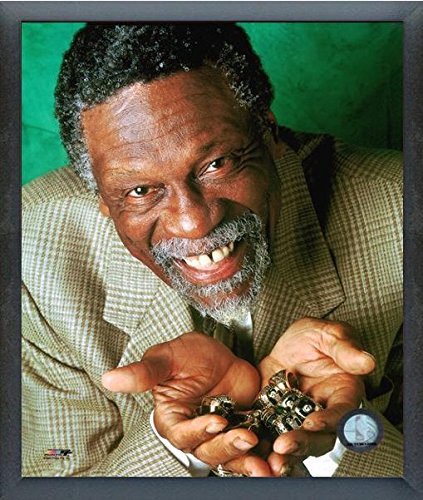

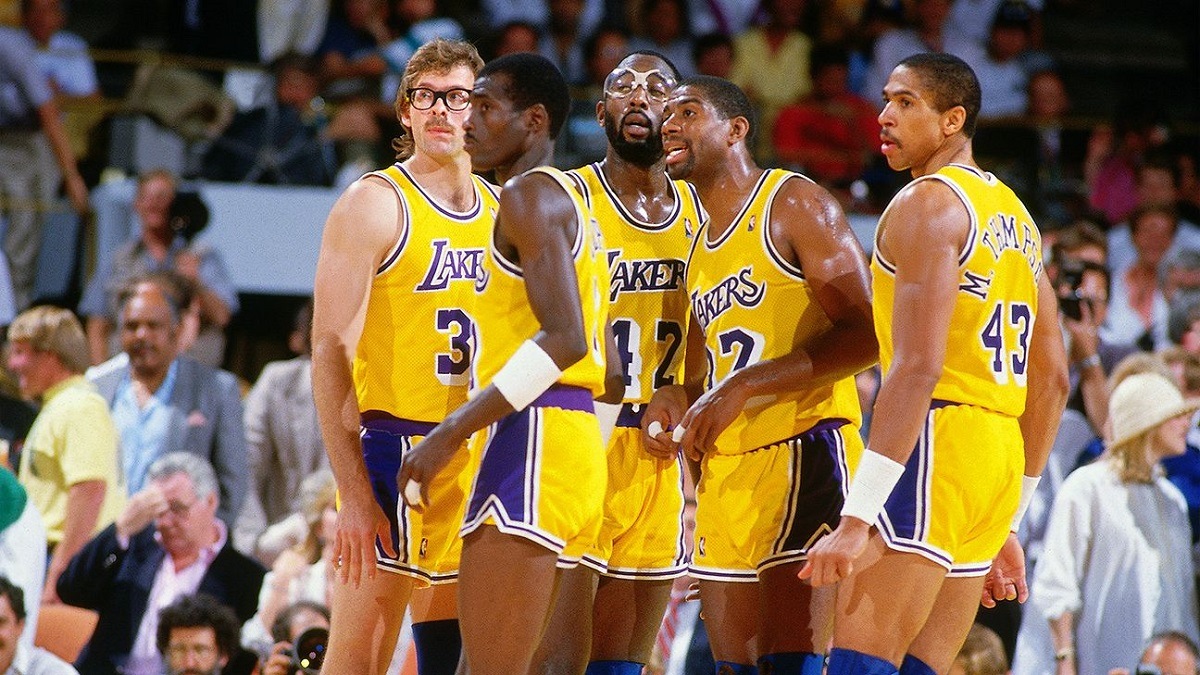
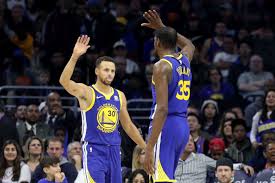


/cdn.vox-cdn.com/uploads/chorus_image/image/28830959/80566483.0.jpg)
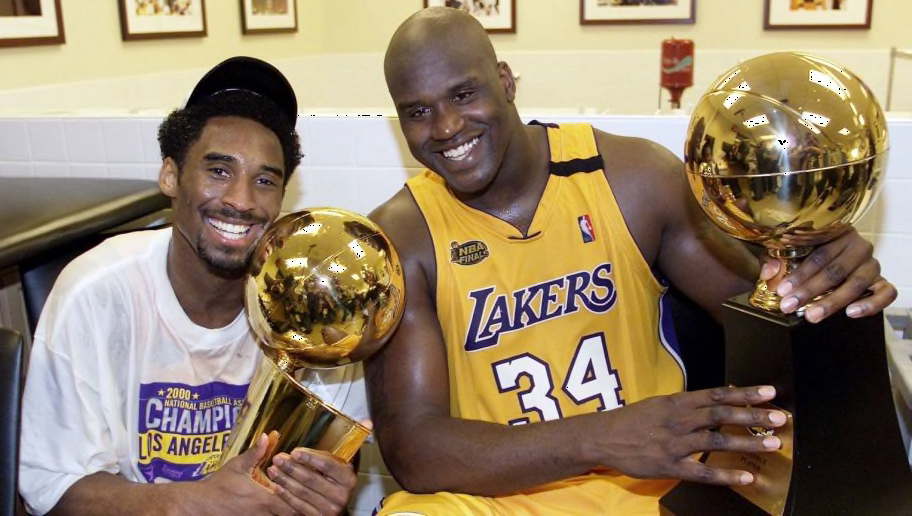
/cdn.vox-cdn.com/photo_images/4987469/135703988.jpg)


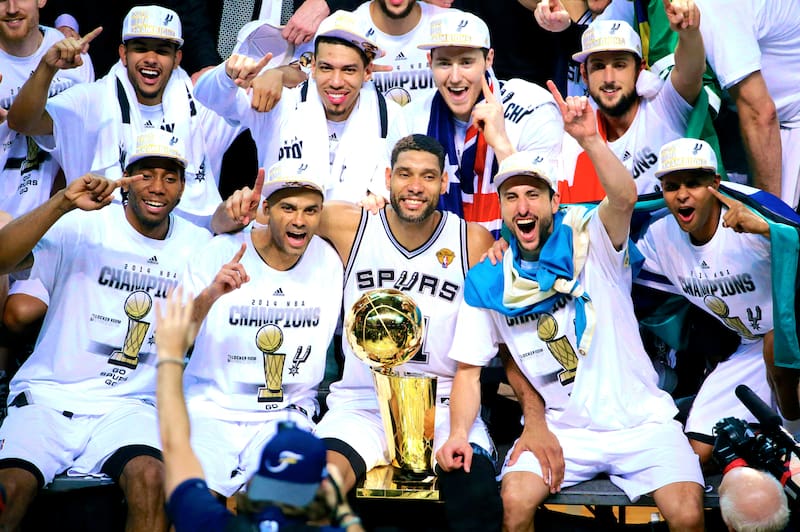


 Sports and Stuff That Matters